Renewing a Commercial Lease in San Diego: What Landlords Should Push For (And What to Give Up)
July 31, 2026
Self-Storage as a Commercial Investment in San Diego: Cap Rates, Operations, and What Buyers Miss
August 7, 2026
The California commercial insurance market is making coverage gaps harder to ignore. In 2024, State Farm non-renewed approximately 42,000 commercial apartment policies across the state, pushing a growing number of landlords into the Excess and Surplus lines market - a segment that now accounts for roughly 20% of commercial property placements in California. E&S carriers can fill coverage gaps. But they work outside standard rate and form regulations, which means policy terms can vary and the burden of understanding what you’re actually buying falls squarely on the landlord. For owners who’ve relied on a broker to manage renewals without much conversation, that’s a real change in exposure.
What compounds the problem is a widespread assumption that meeting a lender’s minimum insurance requirement means being adequately covered - it doesn’t. Lenders need enough coverage to protect their interest in the asset. They are not requiring enough coverage to protect yours. The difference between those two thresholds - in a state with seismic activity, wildfire risk, and aging commercial building stock - can be significant.
This is written for commercial property owners in California who want a clearer picture of what commercial property insurance in California should actually include, what’s missing from standard policies, and how to review whether what they’re carrying matches the risk they’re holding. No policy language, no hypothetical claim scenarios - just a helpful framework for what coverage commercial landlords need and where the gaps tend to appear.
Key Takeaways
- State Farm’s 2024 non-renewals pushed many California landlords into the E&S market, where policy terms vary significantly.
- Lender minimum coverage only protects the loan balance, not your full rebuild costs, lost rental income, or liability exposure.
- Standard policies exclude earthquake, flood, and environmental damage-three risks especially relevant to California commercial properties.
- Replacement cost value policies cost more but prevent massive out-of-pocket gaps that actual cash value policies create through depreciation.
- Every California commercial landlord needs four core policies: commercial property, general liability, loss of rents, and a commercial umbrella.
The Four Core Policies Every California Commercial Landlord Should Carry
Most landlords know they need insurance. Fewer know what each policy is doing - and when one of them is missing or too thin.
Commercial property insurance is the starting point - it covers physical damage to the building itself from events like fire, vandalism, or burst pipes. It covers the structure you own, not the tenant’s equipment or improvements inside it. Your tenants need their own coverage for that.
General liability (GL) insurance is the second core policy and it works with claims from third parties - think a visitor who slips in a common area and sues you personally. GL pays for legal defense and settlements as high as your policy limit - it’s not optional. A single premises liability claim in California can run well into six figures before it gets close to a courtroom.
Loss of rents coverage is one that landlords sometimes skip - especially those with triple-net leases who assume the rent will just keep coming. But if a fire or flood makes your building uninhabitable, your tenant legally can’t pay rent for space they can’t use. Loss of rents coverage replaces that income while repairs happen - it’s bundled with your property policy and it has a time limit, so the coverage period matters when you choose a plan.
The fourth policy is a commercial umbrella, and it does one thing - it sits above your GL policy and kicks in once that limit runs out. GL policies have caps, and in a lawsuit those caps can be reached faster than you expect. A commercial umbrella policy is usually one of the cheaper ways to add a large amount of extra protection - in increments of one million dollars - without a dramatic increase to your premium.
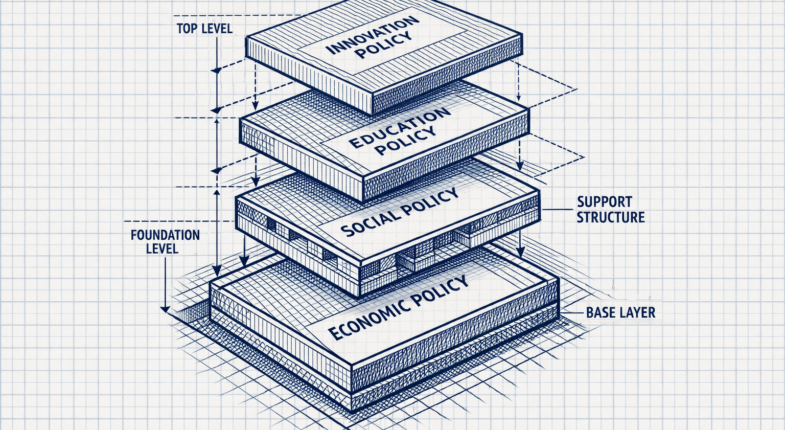
Together these four policies form the base layer. What they leave out is a separate conversation about lease-level asset protection entirely.
What Standard Policies Almost Never Cover - and Why That Matters in California
Even a solid insurance stack can leave you exposed in ways that aren’t obvious until you file a claim. Three exclusions come up again and again for California landlords: flood damage, earthquake damage, and environmental or pollution liability. None of these are covered under a standard commercial property policy.
Earthquake exclusions are the ones that hurt the most here. California sits on some of the most active fault lines in the country, and damage from seismic events is explicitly excluded from standard policies. To get that coverage, you need a separate policy - either through the California Earthquake Authority or a private carrier that writes standalone earthquake insurance. The premiums can be steep. But so can an uninsured structural repair on a building that shifted six inches overnight.
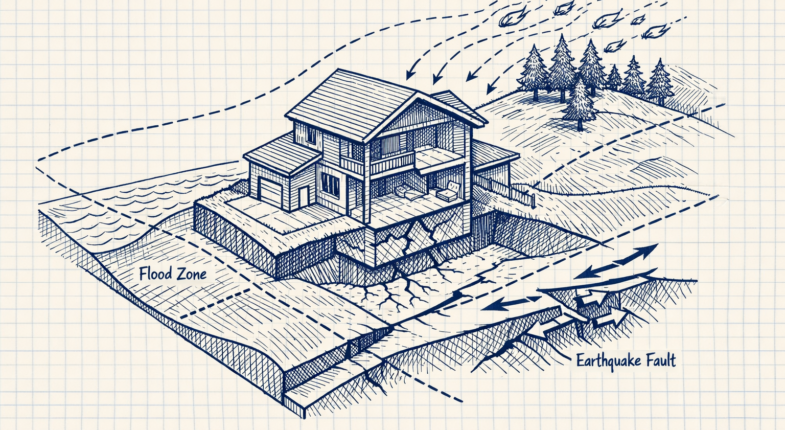
Flood is a little more layered. Most landlords believe that water damage is water damage. But insurers draw a hard line between internal water events (like a burst pipe) and external flooding. The latter is excluded. In California, this matters more than most know because wildfires strip vegetation from hillsides and leave the land unable to absorb rain. A property near a burn scar has a flood exposure even if it’s nowhere near a river or coastline. Flood coverage usually goes through the National Flood Insurance Program or a private flood policy added separately.
Environmental and pollution liability is the third gap, and it’s especially relevant if you own an older building. Properties built before the 1980s may have asbestos, lead paint, or underground storage tanks, and the cost to remediate these can be significant. Standard policies won’t touch contamination-related claims.
Consider where your property sits and what it’s made of. A newer building in a low-seismic zone has a different risk profile than a 1960s warehouse near a former industrial site in the East Bay. That context should shape which gaps you actually need to fill.
Replacement Cost vs. Actual Cash Value - The Policy Detail That Changes Everything
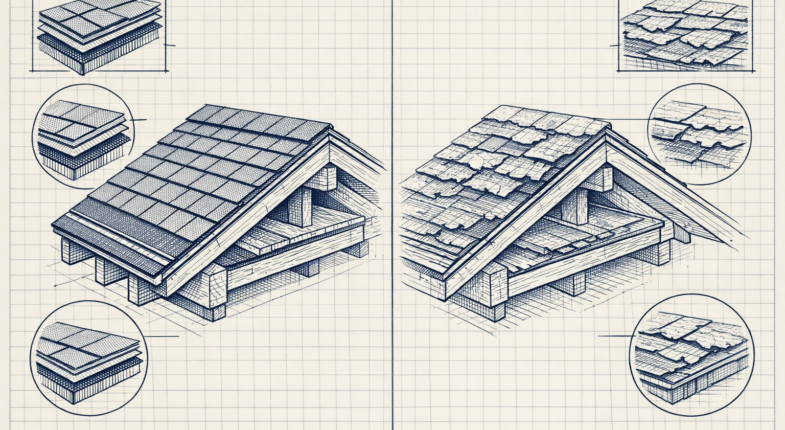
There are two ways an insurer can calculate your payout after a loss. Replacement cost value (RCV) covers what it costs to rebuild or replace the damaged property at today’s prices. Actual cash value (ACV) covers that same amount minus depreciation - so age, wear and condition all cut back on what you get.
That difference sounds simple. But the dollar difference between them can be enormous. In 2024, commercial rebuild costs in California rose by around 14%. That means a building that cost $800,000 to construct ten years ago could cost well over a million dollars to rebuild now - and an ACV policy is still calculating your payout based on the older, depreciated value.
Consider a basic example to make the math concrete. Say a fire damages the roof of a commercial building you’ve owned for 20 years. The roof costs $120,000 to replace at current prices. An ACV policy might peg the depreciated value at $40,000 or $50,000 after factoring in the roof’s age. You’re then left to cover the remaining $70,000 to $80,000 out of pocket before your building is back to a rentable state.

RCV policies cost more in premiums, and that cost is worth understanding upfront. For most landlords the added cost is far smaller than the financial exposure that comes with ACV coverage on an aging property.
There’s also a middle-ground option worth knowing about. An extended replacement cost endorsement can add a buffer - usually 25% to 50% above your policy limit - to account for cost spikes at the time of a loss. This is especially helpful in California, where labor and materials can move fast after a widespread event like a wildfire or earthquake.
The RCV vs. ACV choice can affect more than your payout amount - it determines how quickly you can get a damaged property back into operation and back to generating income.
Why Your Lender’s Coverage Minimum Leaves You Exposed
Lenders set insurance minimums to protect their loan balance - full stop. If your property burns down and the payout covers what you owe the bank, the lender is satisfied. What happens to you financially after that is not their concern.
That’s the mental model worth holding onto here. The lender is protecting their collateral. You need to protect your financial position, which includes the full cost to rebuild, the rent you’d lose during reconstruction, and any liability claims that come up along the way. Those are three very different numbers, and a loan-based minimum only addresses one of them.
Rebuild costs have gone up sharply. Construction costs rose roughly 14% in 2024 alone, which means a coverage amount that felt adequate two or three years ago may now fall well short of what a rebuild would cost. Your policy limit doesn’t automatically adjust to match that.

The helpful check is easy. Pull your latest policy and find the dwelling or building coverage limit. Then get an independent replacement cost estimate for your property - not the market value, not the buy price, but what it would actually cost to rebuild from the ground up at today’s labor and material rates. If the policy limit is anchored to your loan balance instead of that rebuild figure, you likely have a gap worth closing.
Loss of rental income is the piece most landlords don’t think to verify. If a covered event makes your property uninhabitable for six months, lender-minimum coverage doesn’t pay your mortgage while the building sits empty; it’s a separate coverage line and it’s worth checking on your declarations page.
The next section covers when standard carriers won’t write your policy at all - a growing reality for California landlords in parts of the state.
When Standard Carriers Won’t Write Your Policy - California’s FAIR Plan and E&S Market
After State Farm’s wave of non-renewals in 2024, California landlords found themselves shopping for coverage with fewer options than they expected - this isn’t a niche problem anymore. The Excess and Surplus (E&S) market now handles around 20% of commercial property coverage in the state, which means one in five landlords is already outside the standard market.
The E&S market consists of carriers that aren’t bound by California’s standard rate laws. They can price and structure policies how they want, which is why they’ll take on properties that admitted carriers won’t touch. The trade-off is though - premiums average around $5,500 in 2025, up roughly 20% from the year before, and the policy terms can be more restrictive.
California’s FAIR Plan is the other path - it was built as a last-resort option. But that framing undersells what it does. The updated Commercial High Value program, effective July 26, 2025, covers as much as $20 million per building and $100 million per location; it’s actual coverage for landlords with bigger or higher-value properties.
The FAIR Plan does have limits - it covers the structure but won’t include liability or loss of rents on its own, so most landlords combine it with a separate “difference in conditions” policy to fill those gaps - it takes more coordination to put together. But the end result can be solid coverage.
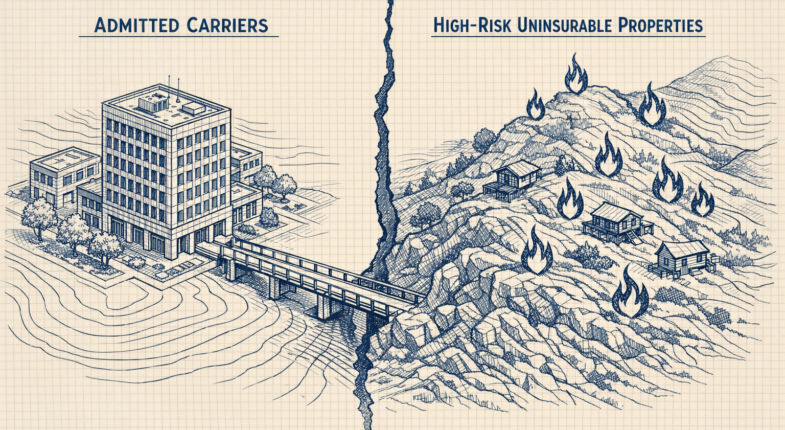
Neither the FAIR Plan nor the E&S market is a sign that something went wrong with your property. They are out there because the standard market in California has contracted - not because landlords in these programs did anything wrong.
If a standard carrier won’t write your policy, there are options with coverage - they just cost more and need more effort to structure correctly. A licensed broker who works in the California commercial space will know how to put the pieces together.
Building a Coverage Stack That Actually Holds Up
If you have not looked closely at your latest policy recently, now is the time to review it with fresh eyes. Pull it out and check three things specifically: how your property is covered in the event of a loss, what is explicitly excluded, and if your rental income is protected if a covered event forces your tenants out. These are the gaps that surface most after a claim - and by then, it’s too late to help with them. A solid commercial real estate due diligence checklist can help you catch these issues before closing.
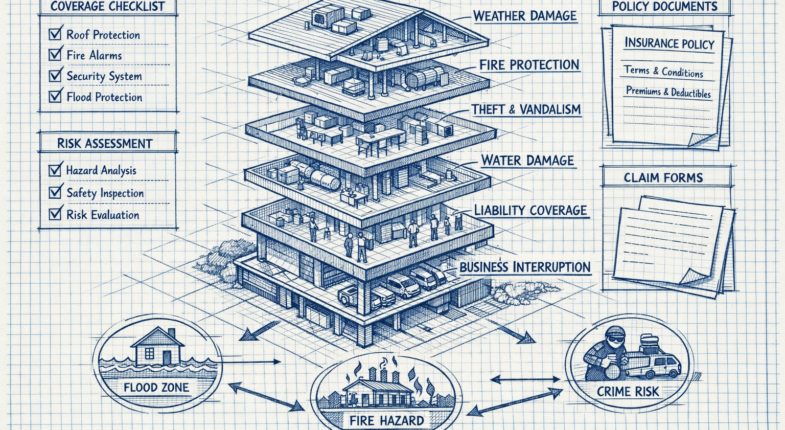
When you are ready to review your coverage, work with a broker who specializes in commercial property insurance in California - not a generalist who works with everything from auto policies to homeowners coverage. A specialist understands the local risk environment, knows the carrier landscape, and can find exposures that a generalist might miss. One focused policy review conversation could surface a coverage gap worth far more than the cost of fixing it - and in California, that conversation is part of taking care of your investment responsibly. If you are unsure where to start, finding the right commercial real estate agent in San Diego is often the first step toward building a more informed team around your property.
FAQs
What four core policies should California landlords carry?
California commercial landlords should carry commercial property insurance, general liability insurance, loss of rents coverage, and a commercial umbrella policy. Together these form a base layer of protection covering physical damage, liability claims, lost rental income, and excess liability beyond standard policy limits.
Does meeting lender insurance minimums mean I'm fully covered?
No. Lender minimums only protect the loan balance, not your full rebuild costs, lost rental income, or liability exposure. A coverage amount tied to your loan balance may fall significantly short of actual rebuild costs, especially given California's rising construction prices.
What does standard commercial property insurance exclude in California?
Standard policies exclude earthquake damage, flood damage, and environmental or pollution liability. These are three of the most relevant risks for California landlords, requiring separate policies through carriers like the California Earthquake Authority or the National Flood Insurance Program.
What's the difference between replacement cost and actual cash value?
Replacement cost value (RCV) pays to rebuild at today's prices, while actual cash value (ACV) deducts depreciation first. On an aging property, this difference can mean tens of thousands of dollars out of pocket before your building returns to a rentable condition.
What options exist if standard carriers won't insure my property?
California landlords can turn to the Excess and Surplus (E&S) market or the state's FAIR Plan. The updated FAIR Plan Commercial High Value program covers up to $20 million per building, though landlords typically pair it with a difference-in-conditions policy for complete coverage.