How to Lease Up a Vacant Commercial Space in San Diego Faster: What Owners Get Wrong First
July 17, 2026
SBA Loan, Conventional, or Private Money: How San Diego Commercial Buyers Choose Their Financing
July 24, 2026
The challenge is that each of those factors is moving on its own timeline. Cap rates on industrial assets in San Diego don’t behave the same way as those on retail strip centers or office buildings. The interest rate environment that’s compressing the buyer pool for one asset class may be creating opportunity for another. And a choice that makes clean financial sense in the abstract can look very different when you account for depreciation recapture, installment sale structuring, or a capital gains rate that may change depending on when a transaction closes.
This framework is built for owners who want to think through the timing choice - not be pushed toward a conclusion. The goal here is to list the variables that actually matter in the current San Diego market, explain how they interact, and give you a structure for weighing them against your own position. Timing the sale of commercial real estate in California isn’t about finding a perfect moment - it’s about understanding which things favor moving now, which favor holding, and which ones are specific to your situation rather than the market at large.
What follows walks through each of the layers in turn: the rate environment and what it means for buyer demand; cap rates by asset type; the tax implications of sale timing; and how your equity position shapes the entire choice. Work through each section relative to your own asset, and by the end you’ll have a clearer picture of where you actually stand.
Key Takeaways
- San Diego’s commercial market varies significantly by asset type; industrial, office, and retail each require different timing strategies for sellers.
- Rising interest rates shrink the buyer pool and compress valuations, with even a half-point cap rate shift costing hundreds of thousands.
- California taxes capital gains as income with no preferential rate, making tax-year timing and installment sale structuring critically important decisions.
- Equity position shapes every sell-or-hold decision; being equity-rich but cash-poor may favor selling over refinancing in certain situations.
- Two or more simultaneous signals-exhausted depreciation, cap rate compression, lease rollover risk-indicate the case for selling strengthens considerably.
How San Diego’s Commercial Market Differs by Asset Type Right Now
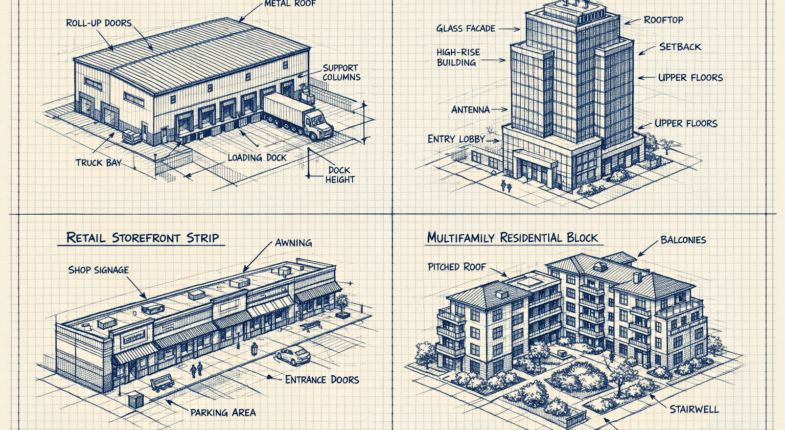
Talking about “the San Diego commercial market” as one thing doesn’t hold up anymore. Industrial is a different story from office and looks nothing like retail or multifamily. If you own commercial property here, your asset type is the most important place to start.
Industrial has been one of the strongest asset classes in San Diego for years. But it’s showing softness heading into 2025-2026. Vacancy rates are sitting near a ten-year high, somewhere in the 7-8% range, which is a notable change from the historically tight conditions owners got used to during the pandemic years. That doesn’t mean industrial is a bad hold. But the tailwind that made it easy to lease or sell has faded a bit.
Office is a tougher picture. Vacancy is still elevated at around 14%, which would have looked alarming a few years ago. There’s a detail worth mentioning, though - Q4 2024 actually showed a rare quarter of positive absorption in San Diego’s office market; it’s not a full recovery. But it does suggest some stabilization is starting to take shape in certain submarkets.
Retail has been quietly more resilient than owners expected, and that’s especially true for well-positioned neighborhood centers and service-based tenants. Results aren’t uniform across the board. But the write-off expected for brick-and-mortar retail hasn’t materialized in San Diego.
The honest question to ask yourself is whether your property type is in a phase of softening or a phase of stabilization. Those two conditions call for very different timing strategies. A softening market can still be a fine time to sell. But you’ll have to go in with eyes open about where buyer demand actually stands for your asset class.
What Rising or Falling Interest Rates Do to Your Buyer Pool
Knowing your asset type is one part of the challenge. The next is who can afford to buy it - and how much borrowing costs change that answer.
When interest rates increase, fewer buyers can qualify for the financing they need to close a deal - this goes past cost-effectiveness in a general sense - it directly shrinks the pool of active investors who are willing to move forward at your asking price. Buyers who do stay in the market will push for higher cap rates to make the numbers work with their new cost of capital.
That cap rate pressure has an effect on what your property is worth on paper. Even a half-point move in cap rate can change a valuation by hundreds of thousands of dollars on a mid-size commercial asset. So a market where rates rise even slightly can translate into a noticeably lower sale price - not because your property got worse, but because the math changed for buyers.

Time on market also tends to stretch when financing is expensive. Buyers take longer to get comfortable, lenders tighten their underwriting, and deals that may have closed in 45 days start taking 90 or more.
Cash buyers are a different story. They can close in as little as 7 to 21 days and they are not affected by rate movements at all. The tradeoff is that they know their speed has value and they will expect a discount to go along with it.
It is worth thinking through this. If your property appeals mostly to smaller investors who depend on financing, a high-rate environment will work against you. If it’s the asset that attracts institutional or cash buyers, the rate picture matters less. Your likely buyer determines how much the rate environment actually can affect your outcome.
Cap Rate Compression and Expansion - What It Means for Your Sale Price
Cap rates are basically the market’s way of pricing income-making property. A buyer takes your net operating income and divides it by the cap rate to get what they’re willing to pay. That means the cap rate itself carries giant weight - even if your income never changes.
If cap rates expand from 5% to 6%, a property generating $200,000 in NOI drops in value from $4 million to roughly $3.3 million. Your income stayed the same. The market just decided to price risk differently.
Cap rate compression works the other way - when rates fall, buyers accept lower returns and prices rise. San Diego saw years of compression that pushed valuations up across most asset classes. That era has mostly passed, and expansion is the more immediate pressure to plan around right now.

Not every property type feels this the same way. Industrial assets in San Diego have held tighter cap rates because demand for warehouse and logistics space has stayed strong. Office is a different story - cap rates there have widened as buyers price in vacancy risk and remote work patterns. Retail sits somewhere in between and depends heavily on the tenant combination and location.
| Asset Class | General Cap Rate Range (San Diego) | Pressure Direction |
|---|---|---|
| Industrial | 4.5% - 6% | Relatively stable |
| Office | 6.5% - 8.5%+ | Expanding |
| Retail | 5.5% - 7.5% | Mixed |
Before you set a price expectation, it’s worth asking if your NOI is strong enough to hold up under cap rate pressure. If your income has dipped or your vacancy rate has crept up, buyers will use those numbers against you in their math. Understanding how cap rates are calculated across property types can sharpen that conversation considerably.
A weak NOI combined with expanding cap rates gives you a compounding effect on your sale price - it’s the conversation to have with your broker when choosing when to list.
Timing the Sale Around Capital Gains, Installment Sales, and Your Tax Year
The calendar year you close a sale matters more than most owners know until they’re deep into escrow. If you had a high-income year - a business sale, a large distribution, or another property closing - stacking a commercial property gain on top of that can push you into a higher federal tax bracket.
California makes this harder. The state taxes capital gains as income with no preferential rate, so you’re paying federal capital gains tax and California income tax on the full gain. That combination can take a significant bite out of your net proceeds.
One way to manage this is an installment sale under IRC Section 453. Instead of recognizing the entire gain in the year you close, you spread it across the years in which you receive payments from the buyer - this doesn’t remove your tax liability - it restructures how you pay it. For some owners, that spread changes their annual tax exposure.

A 1031 exchange is the other tool worth keeping in mind here. If you haven’t identified a replacement property you actually want to buy, you risk triggering a gain you didn’t plan to pay. The 45-day identification window and 180-day close requirement are firm, so the timing of your sale sets the clock.
The right question to ask your CPA is simple: what tax year is better for closing? Sometimes waiting until January instead of December can meaningfully change your exposure for that tax year. A one-month difference in closing timing can produce a very different outcome on your return.
Tax strategy at this level is personal. Your income picture, your basis, your depreciation recapture, and your plans for the proceeds all factor in. Get your accountant involved early - before you set a closing date - not after.
How Your Equity Position Changes the Sell-or-Hold Calculus
Your loan balance matters more than most owners want to admit. If you owe a large share of what your property is worth, a sale might barely cover the payoff - and after closing costs, you could walk away with far less than you expected. That changes the conversation considerably.
On the other end, some owners are equity-rich but cash-poor. The property has appreciated well. But the income it produces gets eaten up by expenses and the wealth is locked inside the asset. A sale can unlock that equity and put it to work in ways that a refinance can’t always match.
A cash-out refinance is worth thinking about if your loan-to-value ratio is low and the numbers make sense - it lets you pull capital from the property without a taxable event and still keep the asset. But it also means taking on new debt and if rates have moved up from when you first borrowed, that can cut into what the property actually nets you each month.

Holding has costs too. Vacancy can creep in slowly, deferred maintenance can become a bigger bill the longer you wait and variable-rate loans can reset at a much higher payment than you signed for. These things don’t always announce themselves; they just accumulate.
It’s also worth naming something that financial frameworks like to skip. Many owners have held a property for twenty or thirty years. To them it represents something they built, or inherited, or sacrificed for - not just an asset. That emotional connection is real and it’s not a weakness - it just means the sell-or-hold question carries more weight than a spreadsheet can capture.
The honest gut-check: if the property stopped generating income tomorrow, would your equity position protect you or pressure you? That answer tells you quite a bit about where you actually stand.
Making the Call - A Simple Framework to Know When You’re Ready
When deciding whether to sell, here are the clearest tells that a sale merits consideration now instead of in another 12-24 months:

- Cap rates in your submarket are compressing, meaning buyers are paying more relative to income - a window that can close quickly as interest rates shift.
- Your depreciation has been substantially exhausted, reducing your tax shelter and making continued ownership less efficient on a net-return basis.
- You have a viable 1031 exchange target identified, or alternatively, you have the appetite and plan to absorb a taxable event strategically.
- Deferred maintenance, lease rollover risk, or tenant concentration is about to create downward pressure on your NOI - selling before that pressure is visible to buyers preserves your valuation.
- Your equity is disproportionately tied to a single asset relative to your broader financial picture, and redeployment would meaningfully reduce risk or increase yield.
If two or more of the tells are present at the same time, the case for selling strengthens considerably. If none apply, patience is likely the more disciplined position. The honest reality of sell commercial estate timing California decisions is that no second will check every box - cap rates, tax law, and personal circumstances don’t peak simultaneously. What matters more than perfect timing is a clear-eyed read on your own situation. Owners who make that assessment with accurate data and the right advisors in place outperform those who are waiting for a better market that may or may not come.
FAQs
How do interest rates affect my commercial property sale price?
Rising interest rates shrink the buyer pool and push buyers to demand higher cap rates, which directly lowers what they'll pay for your property. Even a half-point cap rate shift can reduce a mid-size commercial asset's valuation by hundreds of thousands of dollars.
How does California tax capital gains on commercial property sales?
California taxes capital gains as ordinary income with no preferential rate, meaning you pay both federal capital gains tax and California income tax on the full gain. This makes tax-year timing and installment sale structuring critically important decisions for sellers.
What is an installment sale and how does it help sellers?
An installment sale under IRC Section 453 lets you spread recognized gains across multiple years as you receive buyer payments, rather than paying all taxes in the closing year. This can reduce annual tax exposure without eliminating the overall liability.
Which San Diego commercial asset types are performing best right now?
Industrial has historically been strongest but is showing softness with vacancy near 7-8%. Retail has proven more resilient than expected, while office remains challenged despite some stabilization signs in Q4 2024.
When do multiple signals suggest it's time to sell?
When two or more factors align simultaneously-such as exhausted depreciation, cap rate compression, or upcoming lease rollover risk-the case for selling strengthens considerably. No single moment checks every box, so assessing your full situation matters most.