Commercial Real Estate Due Diligence Checklist: 12 Things to Verify Before You Close in California
July 10, 2026
How to Lease Up a Vacant Commercial Space in San Diego Faster: What Owners Get Wrong First
July 17, 2026
The management fee is rarely where the real money is. It’s in the clauses that follow: the maintenance markup language buried in section 7, the leasing commission structure that applies even after you terminate the agreement, the owner approval threshold that lets a manager authorize a $9,800 repair without calling you because the limit is set at $10,000. These aren’t obscure legal technicalities. They’re standard provisions that seem to be in nearly every commercial property management agreement, and most owners have no idea what they’ve agreed to until something goes wrong.
This is a negotiating guide - it’s written for San Diego commercial property owners who are either interviewing property managers or sitting on an existing agreement they’ve never read. The goal isn’t to make you distrust property managers - most are good pros. You want to make sure you know what you’re signing before the relationship starts, because a few of these clauses directly affect how much money you keep, how much control you retain, and how cleanly you can exit if the relationship stops working.
The eight clauses covered here are the ones that routinely show up in disputes, cost owners money they didn’t budget for, or quietly move decision-making authority in ways the owner never intended. Read each one before your next conversation with a prospective manager - or review what you’re already in.
Key Takeaways
- Management fees aren’t the real risk - buried clauses around maintenance markups, commissions, and approval thresholds cost owners the most money.
- Exclusive management authority can legally bind owners to vendor contracts and decisions made without their knowledge or approval.
- Early termination clauses often penalize owners financially regardless of the manager’s performance, with no carve-outs for documented failures.
- Approval thresholds determine how much managers can spend without owner sign-off - a tiered structure gives owners better financial control.
- Every clause in a commercial management agreement is negotiable; a one-hour attorney review can prevent costly mistakes over a multi-year engagement.
What “Exclusive Management Authority” Actually Gives Away
This clause is where ownership control quietly transfers to someone else. When you grant exclusive management authority, your property manager can make operational decisions, hire vendors, and sometimes negotiate lease terms without calling you first.
The reason this clause exists is simple - non-stop back-and-forth between an owner and a manager slows everything down. A burst pipe at 2am should have a plumber, not a three-day approval chain. So giving the manager authority to act independently does make sense in some situations.
But “exclusive authority” in a contract doesn’t come with a line between routine decisions and consequential ones. One agreement might let a manager approve any repair under $5,000 without your input. Another might let them choose and renew vendor contracts on your behalf with no dollar limit at all.
Do you know what decisions your manager can make without contacting you first? If you have to pause on that, it’s worth going back to the contract language.
California law treats property managers as agents of the owner, which has legal weight. Under general agency principles, an owner can be bound by the actions their agent takes within the scope of that authority. That means a vendor contract your manager signs could become your financial obligation even if you had no idea it was happening.
The scope of that authority is defined almost entirely by what your management agreement says. So if the agreement is broad, your exposure is broad.
Look for a defined approval threshold for expenditures and a list of decisions that still need your explicit sign-off. Lease negotiations, capital improvements, and long-term service contracts should usually need your direct approval regardless of how much you trust your manager.
Some agreements also bundle leasing authority into exclusive management authority and don’t make that obvious; it’s worth a close read because lease terms directly affect your property’s income and tenant relationships for years at a time.
Early Termination Fees and the Exit Traps Most Owners Miss
Once you’ve signed over management authority, the next question to ask is what it costs to take it back. Early termination clauses are where commercial management agreements get quietly punishing, and they’re worth reading twice.
These clauses usually come in a few forms. Some charge a flat fee - a few months of management fees paid in one lump sum. Others penalize you for the staying value of the contract, which means if you’re 8 months into a 2-year agreement, you could owe fees for the 16 months you didn’t use. A third structure withholds commissions already earned on leases the manager secured - even if you’re terminating because their performance has been poor.
That last point is the one to sit with. Some agreements are written so an owner can’t exit without a financial penalty regardless of how the manager is performing. There’s no carve-out for missed reporting deadlines, neglected maintenance coordination, or tenant complaints that went unaddressed for months. The contract just says you owe the fee - full stop.
California courts have reviewed disputed termination clauses in commercial agreements before, and results turn on how the fee was disclosed and if it looks more like a penalty than a basic estimate of loss; it’s a legal path no one wants to go down when they just want to switch management businesses. If you’re already at that point, transitioning to a new property manager is a process worth understanding before you pull the trigger.
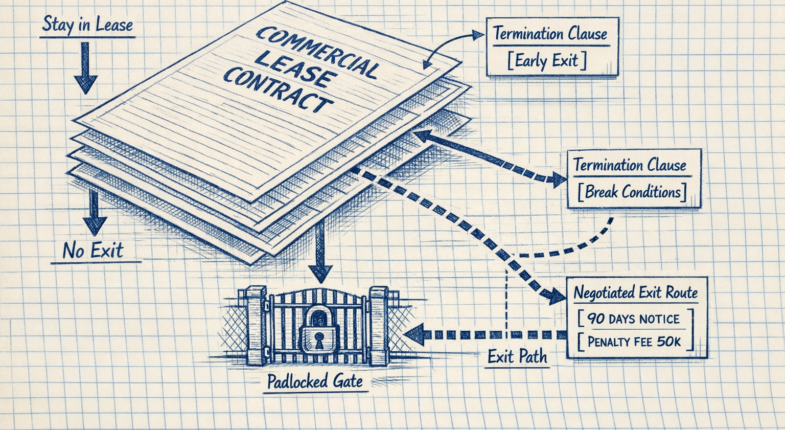
The helpful move is to ask two direct questions before signing anything. First, what does it cost to terminate early and under what conditions? Second, is there any circumstance where you can exit the contract without a fee - like documented underperformance or a failure to meet contractual obligations? Knowing how to evaluate a commercial property manager before you hire one is the cleaner way to avoid this situation entirely.
Some managers will include a performance-based exit clause if asked for one - it doesn’t always make it into the standard template. But that doesn’t mean it’s off the table. The contract you sign is almost never the only version that exists.
Maintenance Markup Language and Hidden Vendor Margins
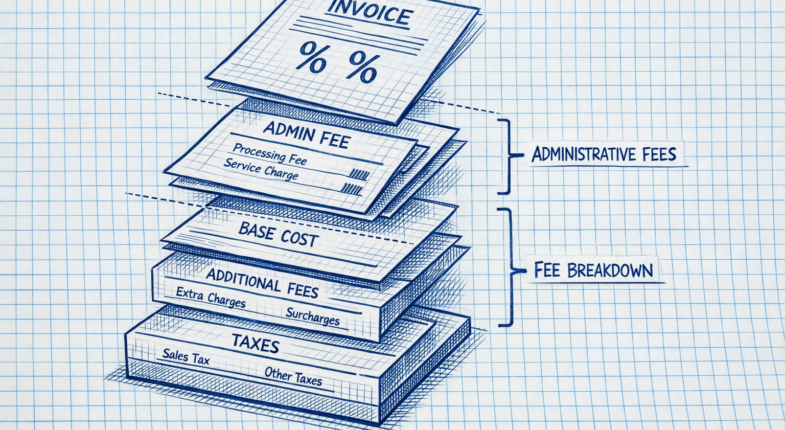
Many property management agreements let the manager add a percentage on top of any maintenance or repair invoice. Here is how the clause usually reads: the owner pays the contractor’s invoice plus an administrative fee of 10 to 15 percent. It sounds minor. But across a full year of repairs, landscaping, HVAC servicing, and scheduled maintenance, that margin can add up to a significant amount of money.
The markup itself is not the problem. Managers do spend time coordinating vendors, scheduling work, and following up, and they should be paid for that. The problem is when the markup is buried in the definitions section of the agreement instead of spelled out in the fee schedule where you’d look for it.
Some agreements disclose this in plain terms, which is what you want to see. Others fold it into language about “administrative costs” or “coordination fees” without attaching a number to it. That vagueness gives the manager room to apply different margins to different jobs without any obligation to tell you.

You won’t necessarily catch this during a quick read of the contract. Most owners see it for the first time when they pull invoices and compare them against what vendors actually charged. By then, months of markups have already been paid.
There are two helpful things to push for before you sign. First, ask for a hard cap on any markup percentage and get that number written into the agreement. Second, negotiate a competitive bid requirement for any repair above a set dollar threshold. Something like $1,000 or $1,500 is a basic starting point, and this protects you without creating a burden for the manager on smaller jobs.
It is also worth asking if the manager has preferred vendors and what their relationship looks like. Some managers receive referral incentives from contractors they use. That is not automatically a conflict of interest. But the goal is to know about it so you can determine whether you are getting fair pricing from your maintenance vendors or just convenient pricing.
Owner Approval Thresholds That Quietly Shift Financial Control
Most management agreements include a dollar amount that defines when a property manager needs your sign-off before spending money. It’s called an approval threshold, and it’s one of the most financially consequential numbers in the entire contract.
The standard range in agreements falls between $500 and $1,000. That looks reasonable on paper. But commercial properties have commercial-scale expenses, and a single HVAC repair can run $4,800 or more without anyone blinking. If your threshold is set at $1,000, your manager is legally allowed to authorize that repair without calling you first.
The threshold number needs to align with two things: your property’s size and your personal comfort with unexpected spending. A smaller retail strip with thin margins probably warrants a lower threshold than a large multi-tenant office building where mid-size repairs are routine. A flat number that ignores this context puts financial control more in the manager’s hands than most owners know before signing.
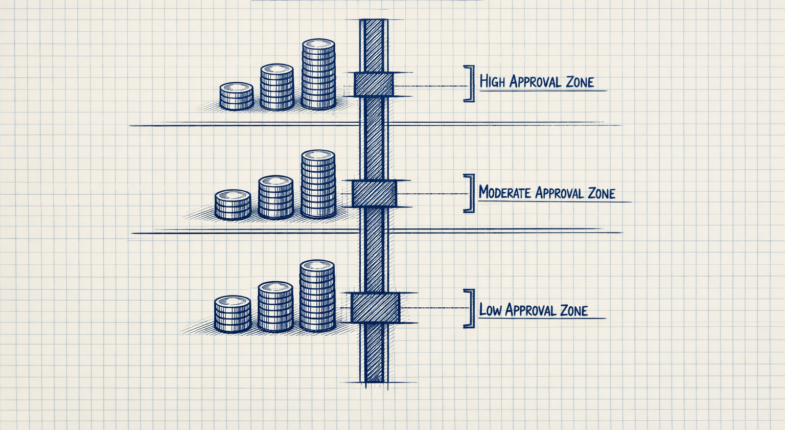
One helpful fix is to negotiate a tiered approval structure instead of a single cutoff number. For example, you might let the manager handle anything under $750 independently, request notification for costs between $750 and $2,500, and require explicit written approval for anything above that. This graduated structure keeps you well-informed without creating delays on small day-to-day decisions.
California commercial property management agreements are not governed by the same consumer protection laws that shape residential property management contracts. There is more room for custom negotiation, which is actually a benefit here. You have flexibility to push for thresholds that work for you, and most experienced managers will not walk away from a deal over a basic request to adjust this number.
Read the threshold clause and ask what categories of expense it applies to. Some agreements carve out emergency repairs entirely, and that gives managers unlimited spending authority in those situations. That is a separate conversation worth having before you sign anything.
Leasing Commission Structures and When You’re Paying Twice
Leasing commissions are separate from your monthly management fee and work very differently. Instead of a flat percentage of rent collected each month, a leasing commission is a one-time payment triggered when a new tenant signs a lease. Most agreements calculate this as a percentage of the total lease value or a set number of months’ rent.
In San Diego, commercial rents can run $3,000 to $6,000 per month or more depending on the submarket, and that math piles up fast. A 4% commission on a five-year lease at $4,500 a month comes to $10,800 - a significant amount to pay without knowing exactly what you agreed to.
The part worth reading carefully is what actually triggers the commission. Some agreements are written broadly enough that your manager could collect a leasing commission on a renewal - even if they had little to do with it. If the tenant stayed, signed a new term, and your manager processed the paperwork, the clause may treat that the same as finding a brand new tenant.

The same thing can happen when you bring in a tenant yourself. You may already have a relationship with a business looking for space and hand that lead directly to your manager to handle the paperwork. A loosely written agreement can still entitle the manager to a full commission on that deal.
It’s worth checking if the agreement addresses co-broke splits too. When an outside broker represents the tenant, the commission is usually split between your manager and that broker. You want to confirm the agreement specifies who pays what so you’re not absorbing both sides. Understanding how a commercial real estate agent structures their fees before you sign can save you from surprises later.
Before you sign, look for language that carves out owner-sourced tenants and puts a cap or separate rate on renewals. These aren’t unusual requests and a manager shouldn’t push back hard on basic carve-outs. You want to pay a fair commission for leasing work - not to pay every time a lease document changes hands. If you’re also weighing what those leasing costs mean for your overall return, it helps to understand how to structure tenant improvement allowances without giving away your return. California disclosure requirements for property management agreements can also clarify what terms managers are obligated to spell out before you sign.
Insurance Rules, 30-Day Notice Gaps, and Who Gets Left Exposed
Insurance clauses are easy to skim past. But they’re worth slowing down for. The agreement should spell out what coverage the property manager has to carry and what you as the owner are responsible for separately.
Most agreements reference a 30-day cancellation notice requirement - it means that if the manager’s insurance policy gets cancelled, they’re supposed to notify you at least 30 days before it happens. That window gives you time to act - but it doesn’t protect you from the period between cancellation and your response. If something goes wrong in that gap, the question of who pays gets tough fast.

A $500,000 general liability benchmark comes up in commercial management agreements. For smaller properties, that number might feel like enough. For a mid-size commercial building in San Diego with multiple tenants and standard foot traffic, it may fall short of what a claim could cost - it’s worth a second opinion from your own insurance broker to confirm it’s adequate.
What the agreement says and what is actually in place are two different things. You should ask for a certificate of insurance directly from the manager’s provider - not just their word that coverage exists. A certificate is a verified document that shows the policy is active, lists the coverage amounts, and confirms you as an interested party.
Your own liability coverage matters here as well. Some agreements include language that shifts responsibility to the owner under certain conditions - like if a tenant injury relates to a maintenance choice you approved. Read those conditions so you understand where your exposure starts.
| Coverage Type | Who Typically Carries It | What to Confirm |
|---|---|---|
| General Liability | Property Manager | Policy limit and certificate on file |
| Property/Casualty | Owner | Active policy with adequate limits |
| Errors and Omissions | Property Manager | Confirmed in writing before signing |
Sign Smarter: What to Do Before You Hand Over the Keys
The most important mindset change is this: every clause in a commercial property management contract is a starting point - not a final word. Fees, termination windows, approval thresholds, and liability terms are all negotiable. Before you sign anything, consider bringing a San Diego-based real estate attorney in for a focused one-hour review. The cost is minimal compared to what a poorly structured contract can cost you over a multi-year engagement. And if a property manager pushes back hard on basic questions or standard modifications, that reaction tells you something before you’ve committed to anything.

As a helpful next step, you can use the eight clauses covered above to build a short checklist and bring it into your next manager interview. Ask directly how their standard agreement works with each one. The managers worth hiring will welcome the conversation - and the ones who don’t are probably not the right fit for your portfolio.
FAQs
What is an owner approval threshold in property management?
An approval threshold is the dollar amount a property manager can spend without your sign-off. If set at $10,000, your manager can authorize a $9,800 repair without contacting you. Negotiating a tiered approval structure gives owners better financial control over unexpected expenses.
Can a property manager sign contracts on my behalf?
Yes. Under California law, property managers act as agents of the owner. If your agreement grants broad exclusive management authority, your manager can legally bind you to vendor contracts and financial obligations without your direct knowledge or approval.
Are early termination fees negotiable in management agreements?
Yes. Early termination clauses are negotiable. Some managers will include performance-based exit provisions if asked. Review whether your agreement allows fee-free exits for documented underperformance, since standard templates rarely include this protection automatically.
What are maintenance markups in property management agreements?
Maintenance markups are percentage fees added on top of contractor invoices, typically 10-15%. They're often buried in definitions sections rather than fee schedules. Negotiate a hard cap on markup percentages and require competitive bids above a set dollar threshold.
When can a property manager charge a leasing commission?
Commission triggers vary by agreement. Some managers can collect commissions on lease renewals or even tenant leads you sourced yourself. Always negotiate carve-outs for owner-sourced tenants and separate rates for renewals to avoid paying commissions unnecessarily.