Commercial Property Management Agreements: 8 Clauses San Diego Owners Should Read Before Signing
July 14, 2026
When Is the Right Time to Sell Commercial Property in San Diego? A Framework for Owners
July 21, 2026
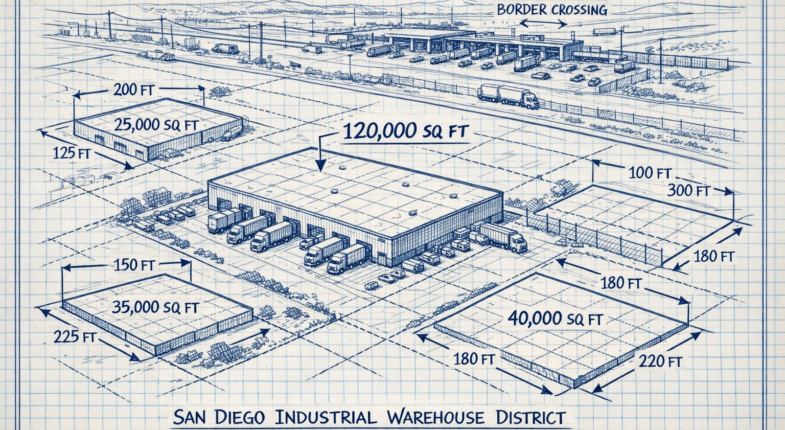
That doesn’t mean your space is unleasable. It means the window for things to go wrong has narrowed considerably. In a softer market, a mispriced listing or a weak marketing presentation doesn’t just slow things down - it can cost you six months of carrying costs while a nearly identical space down the street gets leased because the owner made better decisions up front.
The frustrating part is that most of the mistakes extending vacancy aren’t tough to fix. They’re not about the space itself. They’re about how it’s priced relative to market comps, how well the listing communicates value to a tenant or their broker, and if the deal structure gives a reason to move forward. Those are decisions entirely within an owner’s control - which is the hard truth and the good news.
I’ll walk through the five areas where owners most lose ground when trying to lease up a vacant commercial space in San Diego, and what to do differently. If you’re trying to shorten your vacancy timeline, the answers are more straightforward than you might know - but only if you’re willing to look at where the friction is coming from.
Key Takeaways
- Mispriced listings filter out qualified tenants before showings happen; use closed submarket comps, not citywide averages or outdated benchmarks.
- Low or unstated co-op commissions cause tenant rep brokers to deprioritize your listing, directly extending vacancy timelines.
- Weak listing copy, poor photos, and missing virtual tours lose tenants before they ever schedule an in-person showing.
- Flexible lease terms-free rent, TI allowances, shorter initial terms, negotiable personal guarantees-are actively closing deals in San Diego right now.
- Spaces leasing fastest aren’t necessarily the best on paper; they’re the best-positioned through precise pricing, strong marketing, and tenant-friendly deal structures.
Why Your Asking Rate Might Be the Reason Showings Stalled
Pricing is the most common place owners go wrong first. Not marketing - not photos - not broker relationships - pricing. If your asking rate is off, qualified tenants and their brokers filter your space out before they ever call to schedule a showing.
San Diego’s average asking rate hit $3.11 per square foot in Q2 2025, according to Voit Real Estate Services. That number sounds helpful. But it can work against you if you treat it as a benchmark for your space. Citywide averages flatten out giant differences between submarkets, and those differences are what actually matter to a prospective tenant.
Consider how wide the range is. Vacancy in South San Diego sat at roughly 3.37% while Downtown vacancy was around 38.37% in the same period. A market with 3% vacancy behaves differently from one sitting at 38%, and the rates tenants expect in each place reflect that gap. Pricing a Downtown space like it sits in a tight South County submarket is a fast way to lose showing activity.
The other trap is anchoring your rate to something that feels familiar but isn’t a comp. A neighbor’s asking rate from their listing, a lease you signed three years ago, or a number a friend mentioned - none of these are a substitute for current, closed-transaction data in your submarket. Asking rates on active listings are what owners hope to get. Closed lease comps are what tenants actually paid.
Reading comp data means looking at net effective rent - not just the face rate. Tenant improvement allowances, free rent periods, and other concessions change what a lease is worth to both sides. Two spaces can have the same asking rate on paper while one is dramatically more competitive than the other once concessions are factored in.
The honest question is whether your rate is based on closed comps from your submarket in the last six to twelve months, or on what you need the space to be worth. Those two numbers are not necessarily the same, and tenants’ brokers know the difference immediately.
How Broker Co-Op Commissions Control How Often Your Space Gets Shown
Tenant rep brokers work with multiple listings at any given time and they choose which ones to show their clients first. That choice is not necessarily about which space is the best fit- it’s also about which listing is worth their time to go after.
When a co-op commission is low or not stated in the listing, tenant rep brokers move on to something else. They are running a business too, and a deal that pays less gets less attention. This is one of the most ignored reasons a well-priced space still sits empty for months. Reducing vacancy in commercial properties takes more than competitive pricing alone.
In San Diego commercial leasing, the total commission on a deal is usually split between the listing broker and the tenant rep broker. A standard co-op split lands around 50/50, though it will flex depending on deal size and lease term. What matters most to a tenant rep broker is that their share is competitive and spelled out in the listing.
Some owners push back on paying a full co-op because they want to cut back on leasing costs. That logic makes sense on paper but it backfires in practice. A space that gets shown half as much takes twice as long to lease and every extra month of vacancy costs far more than the commission savings.
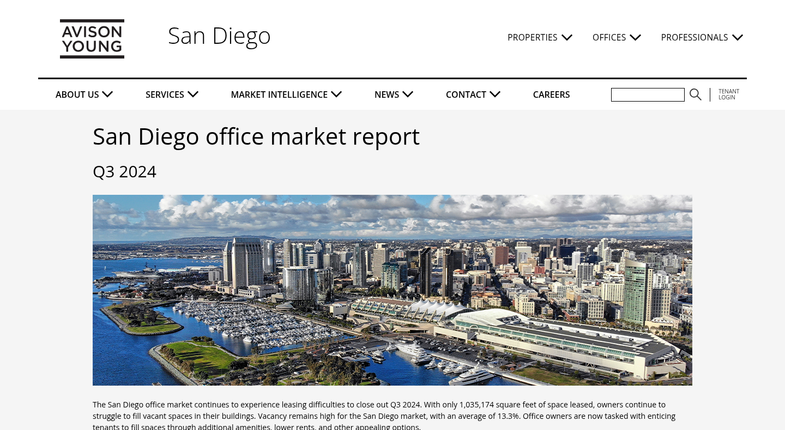
There is also a softer signal that a strong co-op sends to the broker community. A listing that shows a generous and stated commission tells tenant reps that the owner is motivated to work with. Brokers talk to each other and a reputation for being easy goes a long way in how much attention your listing gets.
Make sure your co-op commission is posted in your LoopNet or CoStar listing and confirm it with any broker who reaches out. Do not make them ask twice or dig for the information.
If your current listing broker has not brought up co-op structure as part of the leasing strategy, that’s worth a direct conversation. How your commission is structured and communicated is as much a part of your marketing as your photos or your floor plan. If you are still evaluating who to work with, it helps to know what to look for in a commercial real estate agent before you sign anything.
Writing a Listing and Marketing a Space That Actually Attracts Tenants
Most commercial listings read like they were written for a permit application. Square footage, zoning class, a parking ratio - and not much else. That copy might technically describe the space. But it doesn’t help a tenant picture their business in it.
The first thing to fix is the narrative. A strong listing tells a tenant what the space works for - not just what it is. A suite with private offices and a reception area reads differently to a law firm than a tech startup. You don’t have to write separate listings. But your copy should acknowledge use cases so the right tenants can see themselves in it.
Photos matter more than most owners want to admit. Dim lighting, wide-angle distortion, and shots taken from doorways make even a clean space look like a liability. A professional photographer who has shot commercial interiors will know how to frame a space to show its size and layout. That investment pays for itself when it cuts back on the number of tenants who show up and feel misled.

Virtual tours have moved from a great extra to a helpful necessity. Companies in San Diego are looking at 30-40% less space than they were pre-pandemic, which means decision-makers are far more selective before they schedule a showing. A Matterport-style tour lets a tenant walk the space remotely and rule it in or out on their own time. The ones who request a showing after that are legitimately interested - not just doing due diligence on a vague listing.
Where you post the listing also matters. LoopNet and CoStar reach brokers and tenants. If your space has retail visibility or a consumer-facing use case, local social media and targeted online ads can pull in prospects who aren’t searching listing sites at all.
One thing to get right before you publish anything: the square footage description. Net rentable, gross, and usable square footage are not the same number, and tenants - especially those with brokers - will notice if the figures feel off. A clear explanation of how the space is measured builds credibility early and keeps the conversation moving in the right direction. If you want a broader checklist of what to verify before bringing a space to market, the commercial real estate due diligence guide covers the key items worth reviewing.
Which Lease Terms Are Actually Moving Deals in San Diego Right Now
Once a tenant is interested, the lease itself is where deals either come together or fall apart. Right now, landlords who are filling spaces are the ones willing to have a conversation about terms instead of handing over a document and waiting.
Free rent periods are one of the biggest tools in play. On longer-term leases, landlords are going as high as 12 months of free rent to help tenants get through buildout and ramp-up without bleeding cash from day one. That concession sounds large. But it keeps a qualified tenant in the deal instead of walking them to a competitor’s listing.
Tenant improvement allowances are another place where flexibility is closing deals. Smaller businesses and startups frequently don’t have the capital to build out a raw space on their own, and a landlord who covers that cost is much easier to sign with. It doesn’t have to be a massive number - even a modest TI allowance tells the tenant that you’re a partner in this, not just a gatekeeper.
Shorter first terms with renewal options are also gaining traction. A business that’s two years old won’t commit to ten years without hesitation, and holding out for that commitment can leave a space vacant for months. A three-year first term with two five-year options gives the tenant a path forward while protecting your long-term position.
Personal guarantee negotiations deserve attention too. Full personal guarantees scare off otherwise strong tenants, and that’s especially true for LLC-structured small businesses. Landlords who are willing to negotiate the scope or duration of a guarantee are removing a barrier without necessarily taking on more risk than a shorter lease already carries. It helps to be fluent in the key commercial lease clauses that affect your exposure before those conversations start.
It’s worth understanding the wider context here. San Diego retail vacancy sits around 4.3%, which means retail tenants have options and they know it. Office is a different story, with higher vacancy giving landlords less room to be selective. That contrast tells us the market rewards landlords who read the room and adjust terms to match where demand actually is.
Before you hold firm on a single clause, see what staying vacant for another three months actually costs you. That number is usually bigger than the concession you’re protecting.
Stop Waiting for the Right Tenant - Start Making Your Space the Right Choice
If this exposed any uncomfortable gaps, that’s the point. Take an honest look at your leasing strategy - not everything at once. But find the one or two areas you’ve been staying away from. Maybe your pricing still goes with 2022 assumptions. Maybe your broker incentives are underwhelming in a market where tenant rep brokers are being courted aggressively by competing listings. Maybe your lease terms are written to protect you from every hypothetical danger while quietly repelling the exact tenants you need. Small corrections in the right places move faster than sweeping overhauls.
The spaces leasing in San Diego are not necessarily the largest, the newest, or the most desirable on paper. They are the best-positioned ones - priced with precision, marketed with intention, and structured to make a tenant feel like a choice is easy instead of risky. That positioning is well within your control. Start there.
FAQs
Why is my commercial space not getting showings?
Mispriced listings are the most common culprit. If your asking rate doesn't align with closed lease comps from your specific San Diego submarket, qualified tenants and their brokers will filter your space out before ever scheduling a showing.
How do broker co-op commissions affect my vacancy timeline?
Tenant rep brokers prioritize listings with competitive, clearly stated co-op commissions. A low or unstated commission causes brokers to deprioritize your space, directly extending vacancy-often costing far more than the commission savings you were trying to protect.
What lease terms are closing deals in San Diego right now?
Free rent periods, tenant improvement allowances, shorter initial lease terms with renewal options, and negotiable personal guarantees are actively moving deals. Landlords willing to discuss flexible terms are filling spaces faster than those holding firm on standard structures.
Do photos and virtual tours really impact leasing speed?
Yes. Professional photos and Matterport-style virtual tours allow tenants to qualify your space remotely. Those who request in-person showings afterward are genuinely interested, shortening your leasing timeline and reducing wasted showings.
Should I use citywide asking rates to price my space?
No. Citywide averages mask major submarket differences. San Diego vacancy ranged from roughly 3% in South San Diego to nearly 38% Downtown in Q2 2025. Price based on closed comps from your specific submarket within the last six to twelve months.