San Diego Commercial Real Estate in 2026: What Each Asset Class Is Doing Right Now
August 11, 2026
Understanding Operating Expenses on a Commercial Property: What Eats Your NOI Before You Notice
August 18, 2026
Raw land in San Diego is a fundamentally different investment than an improved property, and treating it otherwise is one of the more expensive mistakes a buyer can make. An existing building - even a tired one - comes with a readable income story, a zoning baseline, and utilities already stubbed to the site. Vacant or underutilized land comes with none of that certainty. What it does have is a layered approval process, a timeline that can stretch well beyond first projections, and a category of costs that don’t show up in early pro formas but like to surface at the worst possible moments.
The entitlement process alone - navigating discretionary versus ministerial approvals, managing zoning change risk, satisfying environmental review requirements, and meeting infrastructure and utility capacity thresholds - can define whether a project pencils or falls apart entirely. Add in the way commercial lenders underwrite land loans compared to improved property, and the picture can become even more difficult. Experienced developers who have worked through these processes in other California markets are sometimes taken aback by how San Diego specifically operates. First-time land buyers in this market face a steeper learning curve still.
I’ll walk through what buyers and developers need to know before getting their hands on commercial land in San Diego - how the entitlement process actually works, to the hidden costs that like to blindside even seasoned investors. The goal is to give you an honest picture of what you are getting into so you can underwrite the opportunity accurately and move through the process with your eyes open.
Key Takeaways
- San Diego commercial land requires navigating discretionary approvals, which average 10-12 months and carry public hearing and appeal risks.
- Mid-size discretionary projects realistically take three to five years from contract to permit; some projects have stretched to ten years.
- Hidden costs including CEQA review, geotechnical reports, and utility infrastructure can exceed $100,000 before breaking ground.
- Raw land loans typically carry 50-65% LTV ratios; entitlement status significantly affects loan availability and terms.
- Overlay zones, community planning groups, and mid-process zoning changes can reduce approved density, breaking original pro forma assumptions.
Discretionary vs. Ministerial Approvals: Which Track Is Your Project On?
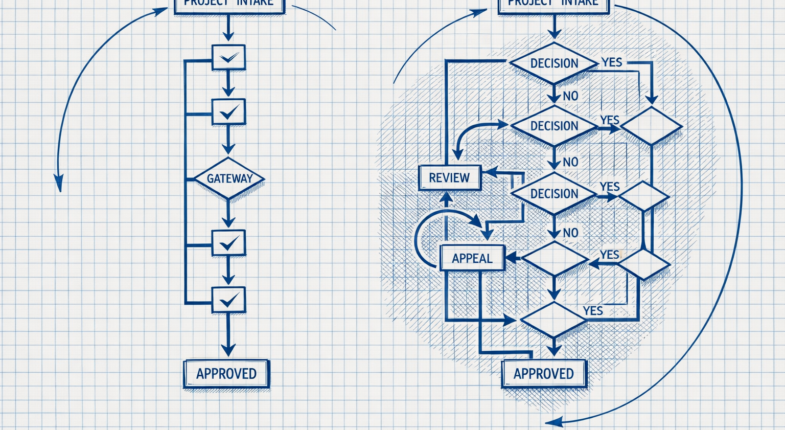
Before you spend a dollar on due diligence, you’ll have to know which approval track your project falls under. This single factor shapes your budget, your timeline, and how much uncertainty you carry through the process.
A ministerial approval is basically a by-right approval. If your project meets the zoning and code requirements, the city has to approve it. There are no public hearings, no judgment calls from planning staff, and no window for neighbors to appeal. These projects move fast - the City of San Diego’s Development Services Department puts the average at around 2 to 4 months for easy small-scale projects.
Discretionary approvals work a bit differently. A planning commission or hearing officer gets to review your project based on wider criteria like community impact and compatibility with surrounding uses. That judgment-based process opens the door to public hearings, agency conditions, and appeals - it also can add time. The City of San Diego averages 10 to 12 months for discretionary approvals, and that clock doesn’t always start on day one of your buy contract.
Most commercial development projects land in the discretionary bucket. A project that needs a conditional use permit, a variance, or a planned development permit will go through discretionary review almost every time. Even a project that fits the zoning can get pulled into discretionary review if it hits thresholds for size or environmental impact.
| Approval Type | Public Hearing | Appeal Risk | Avg. Timeline |
|---|---|---|---|
| Ministerial | No | Very low | 2-4 months |
| Discretionary | Yes | Higher | 10-12 months |
Knowing your track early lets you set realistic contingency periods in your buy contract and plan your financing accordingly.
From Purchase Contract to Permit: What the Timeline Actually Looks Like
Understanding which approval track your project is on is only the first step - the next question is how long the whole process takes. The honest answer is longer than most buyers expect when they first go under contract.
A commercial land project in San Diego usually moves through five phases, and each one has its own timeline and its own ways to slow down.
Phase 1: Due Diligence and Contract (1-3 Months)
This is where you review title, environmental reports, existing entitlements, and zoning. Three months is a basic window for a review on a tough site.
Phase 2: Entitlement Processing (6 Months to 3+ Years)
Ministerial projects move faster here. But discretionary projects go through public hearings and staff review cycles that stretch well past the one-year mark. The difficulty of your project and how prepared your application is will shape this window considerably.
Phase 3: Environmental Review Under CEQA (1-5+ Years)
Large-scale projects that need a full Environmental Impact Report can take two to five years to get through CEQA alone - this phase runs parallel to entitlement in some cases but can also add time on top of it.
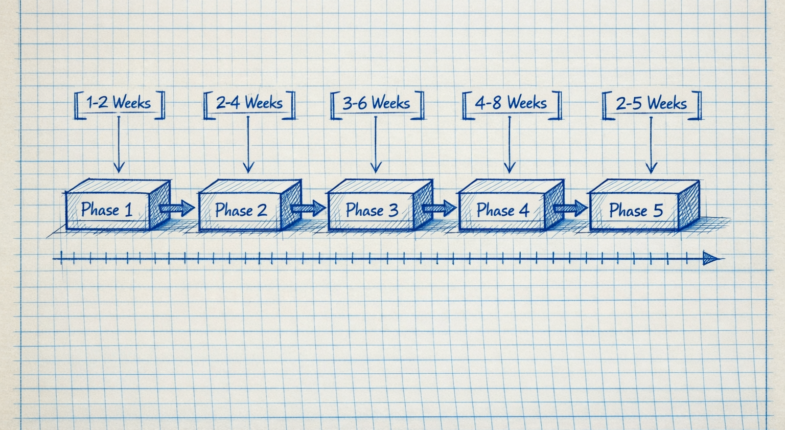
Phase 4: Plan Check (2-6 Months)
San Diego County runs roughly a six-week commercial plan check window for easy submittals. Multiple rounds of corrections, incomplete plans, or a high volume of applications in the queue can push that out to a few months.
Phase 5: Permit Issuance (Days to Weeks)
Once plan check is complete and fees are paid, permit issuance is pretty fast - this phase doesn’t cause delays on its own.
Add this up and a mid-size discretionary project realistically lands in the three to five year range from contract to permit. Research from Silver Gate Development has found that some projects without a master plan in place have stretched to eight to ten years total. That number is worth sitting with before you finalize your pro forma.
Zoning Change Risk and What It Can Do to Your Pro Forma
A parcel zoned for commercial use is a green light. But the zoning label is only the starting point. The density, use type, and building height your project needs may require a conditional use permit or a variance on top of the base zoning. Those approvals go through discretionary review, which means a planning commission or city council votes on them. And votes don’t always go the way the applicant expects.
San Diego also layers overlay zones on top of base zoning. A coastal overlay, a flight path restriction, or a historical resource designation can all narrow what you’re allowed to build even on land that looks well-zoned on paper. Pull the full zoning profile of a parcel before you build a pro forma around it.
The political dimension of discretionary review is something buyers like to underweight. Community planning groups in San Diego have influence over project results and they can push back hard on density, traffic impacts, or building scale. A project that pencils out at five stories may come out of the process approved at three. That changes your return on equity in a way that’s hard to recover from.

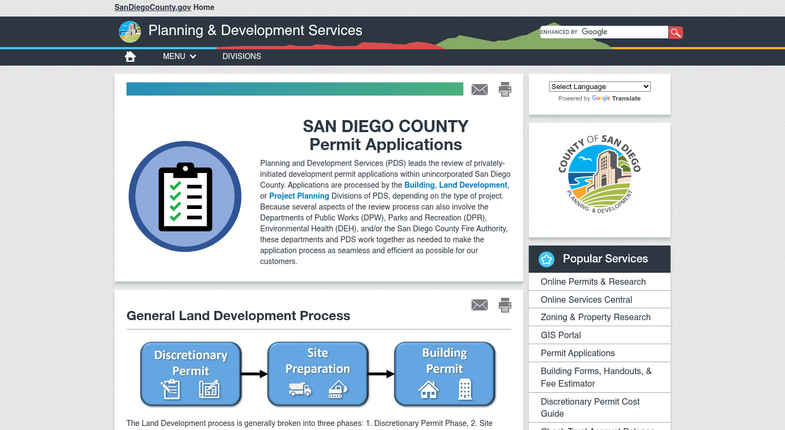
Zoning can also change at the city level while your entitlement is in process. A general plan amendment or a new area plan can change what’s permitted on a parcel midstream. This doesn’t happen often, but it has happened in San Diego and it can change a deal significantly.
The real problem is what zoning uncertainty does to underwriting assumptions. Most pro formas are built on a use, a footprint, and a yield. When any one of those changes, the numbers don’t get smaller - they can make the land price you paid look wrong from the start. That’s worth sitting with before you go hard on a deposit. If you want a broader view of how commercial properties are valued in California, understanding where zoning fits into that picture is a useful place to start.
The Costs Nobody Puts in the Budget: Environmental Review, Geotech, and Utility Capacity
Initial filing fees for environmental review in California can run as low as $1,000 to $5,000. That number gives buyers a false sense of what the total soft costs will look like, and that gap can be a problem when you’re deep into a deal.
CEQA review is the first place budgets like to fall apart. The California Environmental Quality Act can call for biological surveys, traffic studies, noise assessments, cultural resource investigations, and air quality reports - all paid for by the applicant, and each consultant costs money independently, and if your project draws an appeal after approval, you’re looking at legal fees and timeline delays that don’t show up in a first draft pro forma. On a mid-size commercial project in San Diego, total CEQA-related costs can reach $100,000 or more before you break ground.
Geotechnical reports are the second category to consider. San Diego’s terrain is legitimately different - cut hillsides, coastal bluffs, and areas with documented landslide history all sit within the county’s boundaries. A standard geotech report might cost $10,000 to $25,000. But if the findings call for soil remediation or foundation engineering, that number can climb fast. Lenders will want to see this report anyway, so there’s no way to skip it.
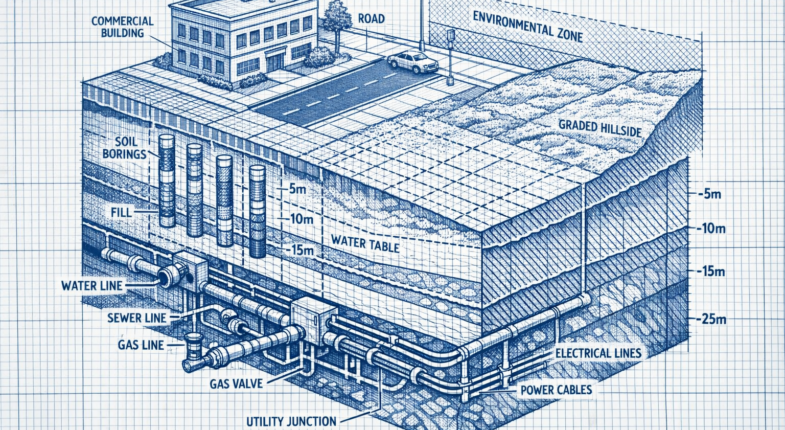
Utility capacity is the third category and the one most buyers underestimate. Water and sewer connections in San Diego are not necessarily available at the curb. If the nearest main is undersized or too far away, the city may need you to fund off-site infrastructure improvements to extend capacity to your parcel. Dry utilities like gas, power, and telecom can add to this further when a site is in a less-developed corridor.
None of these costs are optional, and none of them shrink once you’re in the entitlement process. They’re worth modeling conservatively before you finalize a buy price.
How Lenders Underwrite Raw Land vs. Entitled Commercial Property in California
Financing is where commercial land deals fall apart, and it usually depends on one thing: entitlement status. Lenders look at raw land as one of the riskiest assets they can finance because there’s no income, no development path, and a long timeline before any value gets realized.
For raw land loans, expect lower loan-to-value ratios - usually in the 50% to 65% range - along with higher interest rates and shorter repayment terms than you’d see on a stabilized commercial property. Some lenders will not fund raw land at all without an entitlement path already in motion. That means you might need to show preliminary approvals, a credible development plan, or a conditional use permit before a lender will engage.
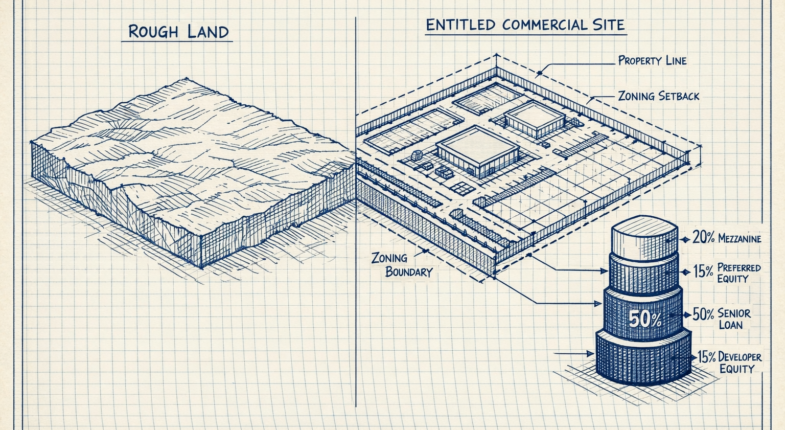
The picture changes when a parcel already has entitlements in place. An entitled commercial site in California is a fundamentally different asset in a lender’s eyes. The uncertainty is lower, the timeline to development is shorter, and the loan terms reflect that - better LTV, more competitive rates, and sometimes access to construction financing as part of the same conversation.
In California specifically, entitlement status can affect not just if you get a loan but what kind. Some lenders will structure a land loan with a built-in conversion to a construction loan once entitlements are obtained. That structure gives you a path forward without refinancing from scratch at each stage.
The helpful takeaway is about timing. Think about your capital stack before you’re in escrow - not after. Know what your lender will actually fund at each phase of the entitlement process and size your equity accordingly. Going in undercapitalized on a raw land deal in San Diego’s regulatory environment is a problem that takes time and money to unwind.
What Smart Buyers Do Before They Sign on the Dotted Line
If you can’t answer each of the questions with hard data - not assumptions - you are not ready to sign. The cost of due diligence before contract is a fraction of what it costs to unwind a deal that turns out to be unbuildable, or to carry a site through a two-year entitlement process your proforma never modeled.

San Diego commercial land development is tough. The regulatory environment is tough, the timelines are long, and the hidden costs are real. But none of that stops well-prepared buyers from closing profitable projects in this market every year. The ones who succeed treat due diligence as the deal itself - not as something that happens after the excitement of going under contract. Do the homework first, and the path from raw land to a finished project can become quite a bit clearer. Understanding incentives and grants available in San Diego can also meaningfully affect how a project pencils out before you ever break ground.
FAQs
What is the average timeline for discretionary approvals in San Diego?
The City of San Diego averages 10 to 12 months for discretionary approvals. However, mid-size commercial projects can realistically take three to five years from contract to permit when accounting for all phases.
What are typical LTV ratios for raw commercial land loans?
Raw land loans in California typically carry loan-to-value ratios of 50% to 65%, along with higher interest rates and shorter repayment terms than stabilized commercial properties. Some lenders won't fund raw land without an entitlement path already in motion.
What hidden costs should buyers budget for before breaking ground?
Buyers should budget for CEQA environmental review, geotechnical reports, and utility infrastructure costs. On mid-size San Diego commercial projects, CEQA-related costs alone can exceed $100,000 before construction begins.
What is the difference between ministerial and discretionary approvals?
Ministerial approvals are by-right and require no public hearings, averaging 2 to 4 months. Discretionary approvals involve judgment-based planning review, public hearings, and appeal risk, averaging 10 to 12 months.
How can overlay zones affect a commercial development project?
Overlay zones such as coastal overlays, flight path restrictions, or historical designations can significantly restrict what you're allowed to build, even on well-zoned parcels. A project approved at fewer stories than planned can fundamentally break original pro forma assumptions.