SBA Loan, Conventional, or Private Money: How San Diego Commercial Buyers Choose Their Financing
July 24, 2026
Renewing a Commercial Lease in San Diego: What Landlords Should Push For (And What to Give Up)
July 31, 2026
What many California commercial property owners don’t realize until that call - or until they’re staring at a closing statement - is that the IRS has been keeping a running tab on every depreciation deduction taken over the years. When the property sells, the government wants a part of the deductions back; called depreciation recapture, and it operates separately from, and on top of, the capital gains tax most sellers are already bracing for. Owners who focus exclusively on the sale price and ignore recapture walk into closing expecting one tax bill and walk out owing a bigger one.
The problem is compounded in California, which layers its own state income tax on top of federal recapture laws, leaving sellers with a combined liability that can seem punishing - especially when it arrives as a surprise. There’s no exemption for long-term holding, no credit for how you managed the asset, and no reprieve because the market did the heavy lifting on appreciation.
To make this concrete, this post follows a single scenario throughout: an owner who purchased a retail building in San Diego in 2012 for $1.2 million, claimed depreciation every year as permitted, and is now selling for $2.4 million. The numbers are basic, the tax math is exact, and the outcome is the kind that catches experienced investors off guard. Understanding how commercial real estate depreciation in California mixes with a sale - and what depreciation recapture on a commercial property sale actually costs - is the first step toward not being blindsided by it.
Key Takeaways
- Depreciation recapture is taxed separately from capital gains, often catching California commercial property sellers off guard at closing.
- The IRS taxes unrecaptured Section 1250 gain at 25%, higher than the standard 15-20% long-term capital gains rate.
- California adds its 13.3% state income tax plus a 3.8% NIIT, pushing combined recapture tax rates to approximately 42%.
- Skipping depreciation deductions doesn’t reduce recapture; the IRS calculates it based on depreciation allowed, not just claimed.
- A 1031 exchange can defer recapture taxes, but requires advance planning before listing the property.
How Depreciation Builds Up Over Time on a Commercial Property
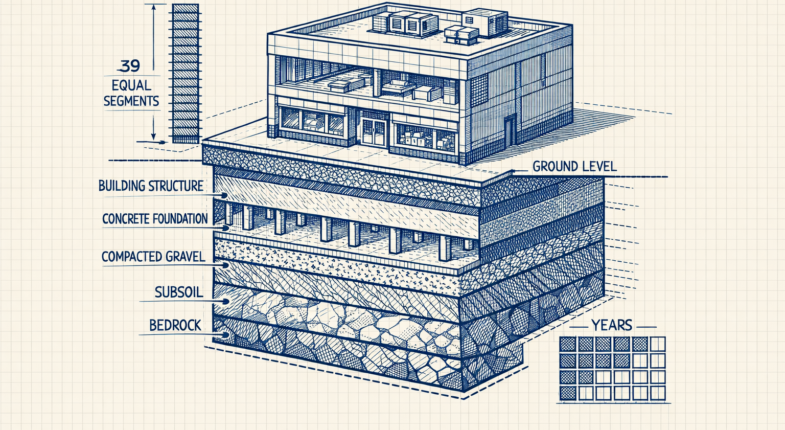
The IRS lets you write off the cost of a commercial building over 39 years - what’s called straight-line depreciation. That means you deduct the same amount each year for 39 years. You want to account for the wear and tear a building takes on over time.
The part that trips up is that you can only depreciate the building itself - not the land underneath it. Land doesn’t wear out, so the IRS doesn’t let you write it off. That means you’ll have to split your purchase price between the land value and the structure value.
That split isn’t arbitrary. Most owners use the ratio from their county property tax assessment to estimate it. If your assessor says the land is worth 20% of the total assessed value and the building is worth 80%, you apply that same ratio to your buy price.
Walking Through a Real Example
Say you bought a retail building in San Diego in 2012 for $1.2 million. Your property tax bill shows the assessor values the land at 25% of the total and the structure at 75%. That puts the land value at $300,000 and the depreciable building value at $900,000.
To find your annual depreciation deduction, you divide the building value by 39.
| Item | Amount |
|---|---|
| Total purchase price | $1,200,000 |
| Land value (25%) | $300,000 |
| Depreciable building value (75%) | $900,000 |
| Annual depreciation ($900,000 ÷ 39) | $23,077 |
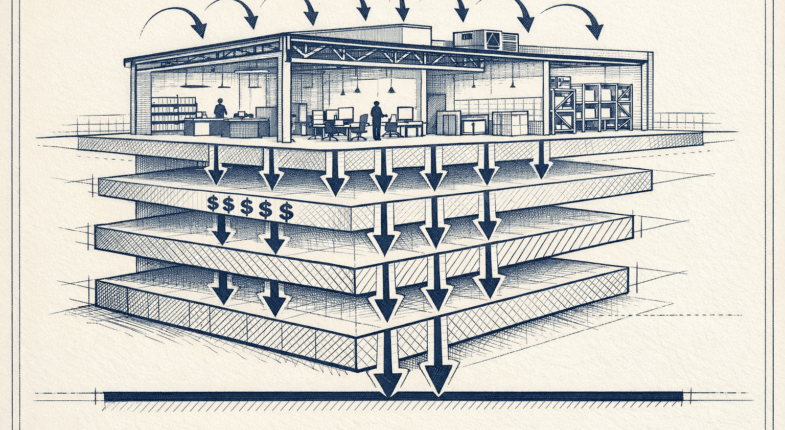
That $23,077 per year gets deducted from your taxable income as long as you own the property - it cuts back on what you owe the IRS each year, which is helpful while you hold the asset.
What 13 Years of Deductions Looks Like
If you sell that same building in 2025, you’ve owned it for roughly 13 years. Over that time, the total depreciation you’ve claimed piles up fast. That number matters quite a bit when you sell.
| Years Owned | Annual Depreciation | Total Depreciation Claimed |
|---|---|---|
| 13 years | $23,077 | $300,001 |
That $300,001 in total deductions has already reduced your taxable income over the years. But it has also lowered your cost basis in the property by the same amount. Your adjusted basis is now roughly $900,000 instead of $1.2 million.
A lower basis means a bigger gain on paper when you sell - it’s what the next section gets into. Some owners also explore cost segregation strategies to accelerate those deductions rather than spreading them evenly over 39 years.
What Unrecaptured Section 1250 Gain Actually Means at Sale
When a commercial property sells, the IRS doesn’t treat the profit the same way. The gain gets split into two separate pieces, and each one gets taxed at a different rate.
The first piece is called unrecaptured Section 1250 gain - the portion of the profit that equals the total depreciation the owner already deducted over the years. The IRS taxes this piece at a flat 25% federal rate, not at the lower long-term capital gains rate owners expect to pay on the rest.
The second piece is the remaining gain above that. If the sale price exceeds the adjusted cost basis and the total depreciation taken, that leftover amount gets taxed at the standard long-term capital gains rate, which is 15% or 20% depending on the owner’s income.
The difference matters quite a bit. Long-term capital gains rates can be as low as 15%. But unrecaptured Section 1250 gain always hits at 25% on the federal side. That 10-point spread can mean significant money on a large commercial sale.
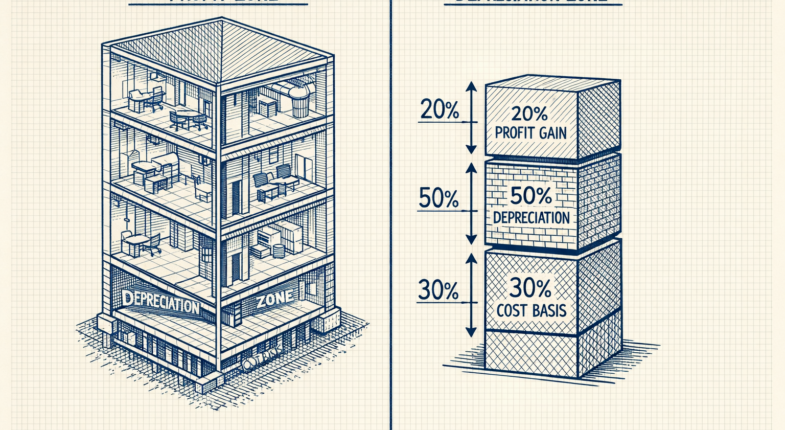
A concrete example shows how this plays out. Take a commercial property in San Diego purchased for $1.5 million. The owner allocates $1.2 million to the building and depreciates it over 39 years using straight-line depreciation. After 15 years, the total depreciation taken is roughly $461,500. That brings the adjusted cost basis down to about $1,038,500.
Now the owner sells for $2.4 million. The total gain is the sale price minus the adjusted cost basis, which comes to approximately $1,361,500. But that number doesn’t get taxed as one flat amount.
| Component | Amount | Federal Tax Rate |
|---|---|---|
| Unrecaptured Section 1250 gain (depreciation taken) | $461,500 | 25% |
| Remaining long-term capital gain | $900,000 | 15% or 20% |
| Total gain at sale | $1,361,500 | Split between both |
The $461,500 gets carved out first and taxed at 25%. The remaining $900,000 then gets taxed at the applicable long-term capital gains rate. At the highest income level, the federal tax on the recapture portion alone comes to about $115,375.
This recapture tax applies regardless of whether the owner took the depreciation deductions each year. The IRS calculates it based on the depreciation the owner was allowed to take, not just what they actually claimed. Skipping deductions doesn’t lower the recapture bill at sale.

California’s Tax on Top - and the NIIT That Quietly Adds More
Once you have the federal recapture number figured out, California comes in with its own bill. The state does not treat depreciation recapture as a separate category the way the federal tax code does. Instead, California taxes the entire gain from a property sale - recapture included - as income at whatever bracket the seller falls into.
California’s top marginal rate is 13.3% and it applies to income above $1 million for single filers. For commercial property owners, a large sale will push total income well into the upper brackets for that year. That means the recaptured depreciation could be looking at the full 13.3% state rate on top of everything else.
Then there’s the Net Investment Income Tax, or NIIT - a federal surtax of 3.8% that applies to investment income for sellers above income thresholds - $200,000 for single filers and $250,000 for those who are married and filing jointly. A gain from a commercial property sale usually pushes sellers past those numbers, so the NIIT applies in full.
To see what this looks like in practice, take the San Diego example from the previous section. The recaptured depreciation was taxed federally at 25%. Add the 3.8% NIIT and then California’s 13.3% and the combined rate on the recapture portion alone reaches 42%. That is a real number when the recapture amount runs into the hundreds of thousands of dollars.
| Tax Layer | Rate |
|---|---|
| Federal Unrecaptured Section 1250 Rate | 25% |
| Net Investment Income Tax (NIIT) | 3.8% |
| California State Income Tax (top rate) | 13.3% |
| Combined Rate on Recapture Portion | ~42% |
There is one more wrinkle worth knowing about, and that’s owners who acquired property after January 19, 2025. California does not conform to the federal 100% bonus depreciation laws. So if a seller claimed full bonus depreciation on a federal return, California might not have recognized those same deductions. That gives you a difference in the adjusted basis California uses to calculate gain versus what the IRS uses. That difference can change what the state says you owe at sale.
This nonconformity does not cancel out the depreciation recapture at the federal level - it means the state’s version of the gain calculation may look different, sometimes in ways that produce a bigger California tax bill than sellers expect when they run the numbers using only federal figures.
Before You List That Property, Run the Recapture Math First
Timing and structure matter more than most sellers know. Depending on where the property sits in its depreciation schedule, how long it has been held, and what the owner’s income looks like in a given year, there may be legitimate reasons to accelerate or delay a sale. A 1031 exchange is also worth consideration - when executed correctly, it lets owners defer capital gains taxes and depreciation recapture by rolling proceeds into a like-kind replacement property. That deferral isn’t forgiveness. But it can preserve capital that would otherwise go to the IRS and California’s Franchise Tax Board, keeping more equity working in the next investment.
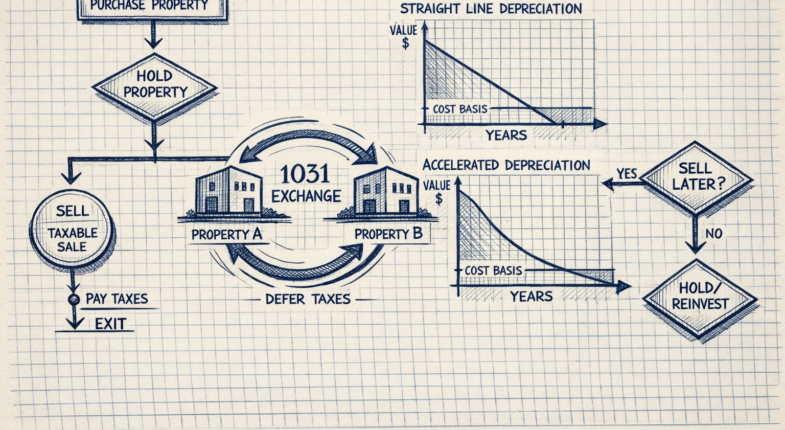
The tax liability with depreciation recapture is real. But it shouldn’t be read as a reason to hold a property indefinitely or stay away from a sale that otherwise makes financial sense - it means that selling a commercial property in California is going to need the same deliberate preparation as acquiring one. Sellers who plan ahead - who know their adjusted basis, their exposure, and have looked into all available strategies - are in a far stronger position than the ones who discover the tax consequences at the closing table. You want to have that conversation early enough to do something about it.
FAQs
What is depreciation recapture on a commercial property sale?
Depreciation recapture is when the IRS taxes back the depreciation deductions you claimed over the years of ownership. It is calculated separately from capital gains and taxed at a flat 25% federal rate on the recaptured amount.
How does California tax depreciation recapture differently than the IRS?
California treats recaptured depreciation as ordinary income, taxing it at up to 13.3% on top of the federal 25% rate and the 3.8% NIIT, pushing the combined rate on recapture to approximately 42%.
Does skipping depreciation deductions reduce recapture taxes at sale?
No. The IRS calculates depreciation recapture based on the depreciation you were allowed to take, not just what you actually claimed. Skipping deductions does not lower your recapture bill.
Can a 1031 exchange defer depreciation recapture taxes?
Yes. A properly executed 1031 exchange allows sellers to defer both capital gains taxes and depreciation recapture by reinvesting proceeds into a like-kind replacement property, though this requires advance planning before listing.
How is the depreciable value of a commercial property calculated?
Only the building itself can be depreciated, not the land. Owners typically use their county property tax assessment ratio to split the purchase price between land and structure, then depreciate the structure over 39 years.