When Is the Right Time to Sell Commercial Property in San Diego? A Framework for Owners
July 21, 2026
Depreciation and Depreciation Recapture on Commercial Property Sales in California: What Owners Owe
July 28, 2026

San Diego’s commercial market presents its own layer of complexity when it comes to financing decisions. Elevated property values, a competitive lending environment, and a rate climate that’s still shaking out from the past few years of volatility mean that what worked for a buyer in 2021 doesn’t necessarily work today. Lenders have tightened underwriting in some categories while loosening it in others. Owner-users are finding benefits in programs that pure investors can’t access. And private capital has moved into spaces that conventional banks have pulled back from. The market is legitimately different right now, and it rewards buyers who understand their options before they sit down at the table.
I’ll walk through every financing path available to commercial buyers in San Diego - SBA 7(a) and 504 loans, conventional commercial mortgages, CMBS, bridge loans, and private or hard money - not as a glossary, but as a helpful guide to when each one actually makes sense. The right fit can depend on more than your credit score - it can depend on what you’re buying, what you plan for it, how stabilized the asset is, and how fast you’ll have to move. Get those variables right, and the financing choice can become quite a bit clearer.
Key Takeaways
- SBA 504 and 7(a) loans suit owner-users only, requiring 51% occupancy, with down payments as low as 10%.
- Conventional commercial loans work best for investors with stabilized properties, requiring 25-40% down payment.
- Bridge and private money loans close in 10-14 days but carry high rates of 8-15%, requiring a clear exit strategy.
- San Diego’s 23% office vacancy has tightened lender underwriting on office assets; industrial and multifamily perform cleaner.
- Pre-qualifying across multiple loan types gives buyers negotiating flexibility rather than forcing deals into a single financing option.
SBA 7(a) and 504 Loans - What San Diego Owner-Users Actually Qualify For
Both SBA loan programs are built for one type of buyer: the business owner who plans to occupy the property they’re purchasing. If you’re an investor looking to lease a building out entirely, these programs aren’t the right fit. The SBA wants to see that your business will use at least 51% of the space.
The 7(a) loan goes as high as $5 million and gives borrowers flexibility in how the funds get used. You can roll in equipment, working capital, or renovation costs alongside the real estate purchase. The 504 loan is structured differently - it pairs a bank loan with a loan from a Certified Development Company, and together they can reach as high as $20 million for the right project.
The 504 program gets more attention from buyers who want their rate locked in. Current fixed rates on the CDC portion run in the 5.98-6.43% range, and down payments can be as low as 10%. That rate is hard to match with a conventional loan in San Diego’s commercial market.
One cost to keep in mind is the guarantee fee. SBA loans carry fees of roughly 2.5-3% of the loan portion, which can add to your closing costs - it’s worth running the full numbers to compare an SBA loan to other options.
Timeline is the other thing buyers need to plan for. SBA deals routinely take 60 to 90 days to close, sometimes longer. If you’re competing on a property where the seller wants a fast close, that pace can put you at a disadvantage.
A few deal types are a poor match for SBA financing. Vacant buildings are a common example - if your business isn’t ready to occupy immediately, you might not meet the occupancy requirements at closing. Mixed-use properties where the commercial space is primarily tenant-occupied also fall outside what the SBA will approve.
For the right buyer, the combination of a low down payment, long amortization, and fixed rates makes SBA financing competitive in a high-cost market like San Diego.
Conventional Commercial Mortgages and CMBS - Terms, Timelines, and When Investors Reach for These First
For investors who are not planning to occupy their property, conventional commercial loans are usually the starting point. There are no owner-occupancy requirements to work around and no limits on how you use the space.
As a rate idea, conventional commercial mortgages in the latest environment are landing between 5.14% and 6.79% for well-qualified borrowers on stabilized assets. Down payments run between 25% and 40%, and most loans amortize over 25 years. That down payment range is wider than buyers expect, and it can depend on the asset type, the lender’s appetite, and how the numbers on the property perform.
That last part matters quite a bit. Conventional commercial underwriting is built around debt service coverage ratio, or DSCR. Lenders want to see that the property generates enough income to cover the loan payments with room to spare. Most lenders want a DSCR of at least 1.20 to 1.25, and the rates with DSCR-based loans are running between 6.12% and 8.5% depending on the deal. The stronger the income picture, the better the terms you can negotiate. If you want a deeper look at how lenders evaluate the numbers, the commercial real estate underwriting process is worth reviewing before you go to market.
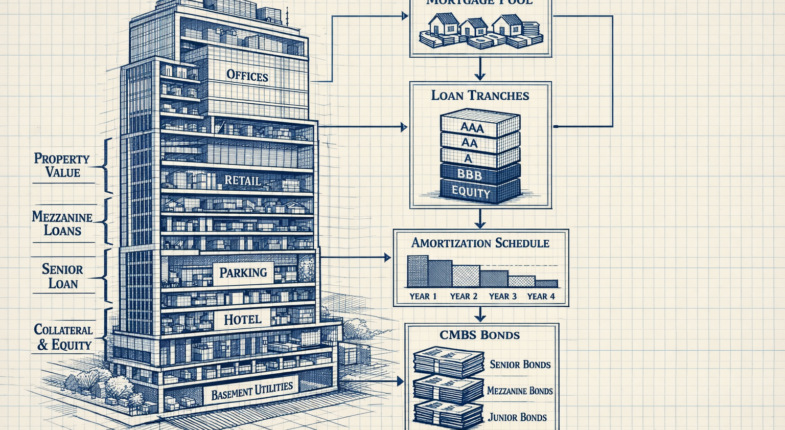
CMBS loans - commercial mortgage-backed securities - serve a different part of the market. These are usually for bigger, stabilized properties where the loan will be pooled and sold to investors. The trade-off is that CMBS comes with strict prepayment structures and less flexibility mid-loan. But the fixed-rate terms can be interesting for long-hold strategies.
One thing worth knowing: San Diego’s office vacancy rate has climbed to around 23%, and lenders have taken notice. Underwriting on office assets has tightened, and some lenders are pulling back from that asset class entirely. Industrial, multifamily, and retail with strong tenants are cleaner looks.
| Loan Type | Rate Range | Down Payment | Best For |
|---|---|---|---|
| Conventional Commercial | 5.14%-6.79% | 25%-40% | Stabilized income properties |
| DSCR-Based Loans | 6.12%-8.50% | 25%-35% | Income-driven underwriting |
| CMBS | Varies | 30%-40% | Larger stabilized assets, long holds |
The investor appeal here is easy. No occupancy requirements, no restrictions on how you structure your tenants, and a lending process that’s built around the property’s performance instead of your business plan. Understanding how commercial properties are valued in California can also sharpen your position before approaching lenders.
Bridge Loans and Private Money - The Financing That Makes Deals Move When Nothing Else Will
Some deals just won’t fit inside a bank’s underwriting box. A distressed retail strip that needs renovation before it can carry a tenant, a fast close on a warehouse the seller won’t wait 60 days for, a borrower with strong assets but a tough tax return - these are the moments when bridge loans and private money become the most helpful path forward.
Private lenders and hard money lenders work from asset value instead of borrower financials. That one difference opens the door for deals that conventional lenders and SBA programs would turn away at the application stage.

What These Loans Actually Cost
The trade-off is price. Rates on bridge and hard money loans in San Diego’s commercial market run anywhere from 8% to 15% and sometimes higher for distressed assets with execution risk. Terms are short - usually 6 to 24 months - and origination fees add to the front-end cost. It’s not cheap capital, and no one should walk into it thinking otherwise.
Buyers pay for the speed. A well-structured private loan can close in 10 to 14 days in some cases. For a competitive off-market deal or a distressed asset that needs to move faster, that timeline can be the difference between getting the property and losing it.

The Exit Strategy Question
Private lenders will ask one question above almost everything else: how are you getting out of this loan? A 12-month bridge loan with no refinance path or sale plan is a problem waiting to happen. Buyers who treat private money as a permanent solution tend to end up in extension negotiations with limited options.
The exit strategy is not a formality - it’s the plan. A value-add buyer might stabilize the property, get it to market rents, and then refinance into a conventional loan once it qualifies. A developer might sell. In either case, lenders want to see that the borrower has thought it through before they fund.
Bridge and private money work well as a tool to get into a deal and create value that traditional financing can then support. The buyers who use it well treat the loan term as a working deadline and plan around it from day one.
Matching Your Deal and Borrower Profile to the Right Financing Path
Going after the wrong loan type from the start is the fastest way to lose months on a deal, and each financing path has a natural home - a deal type and borrower profile where it performs best - and forcing a mismatch creates delays that can cost you the property entirely.
The table below is a quick reference. Find your situation across the left column and trace across to see which path tends to fit.
| Your Situation | Best Fit | Why It Works |
|---|---|---|
| Owner-user, 10% down, strong credit | SBA 504 or 7(a) | Built for this exact scenario |
| Investor, stabilized property, 25-30% down | Conventional commercial | Clean underwriting, competitive rates |
| Investor, value-add or vacant property | Bridge or private money | Lenders won’t wait for stabilization |
| Time-sensitive close, any property type | Private money | Speed over cost, short-term use |
| Owner-user, thin credit, new to business | SBA with extra prep | More flexible than conventional |
| Investor trying to use SBA | Not eligible | SBA is owner-user only - full stop |
That last row is the most common mismatch a commercial broker sees. Investors hear about low down payments on SBA loans and assume they can use the program to buy rental or investment properties. They can’t. The SBA is a business-use program and the borrowing entity has to occupy the property.
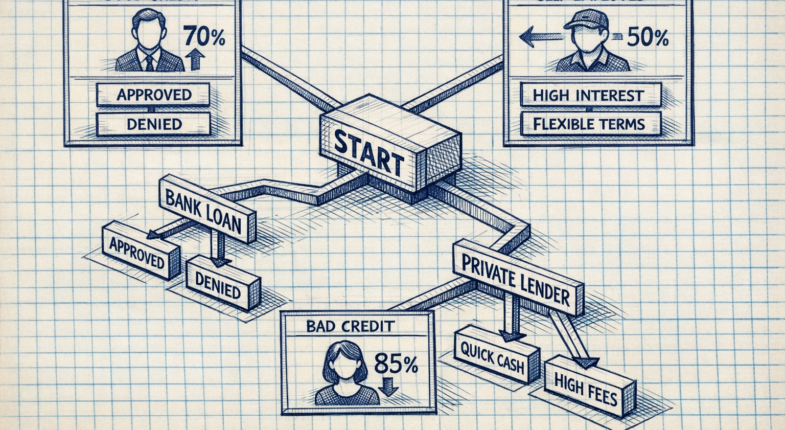
Your exit plan matters just as much as your entry. If you take a bridge loan to get into a value-add property, you need a clear timeline to reach conventional or permanent financing. Lenders want to see that plan in writing, and buyers who haven’t thought it through tend to get stuck at the refinance stage.
Down payment capacity is usually the variable that narrows the field the fastest. Ten percent gets you into SBA. Twenty-five to thirty percent is the starting point for most conventional commercial deals. Private money can be flexible, but the cost goes up with that flexibility.
Consider your credit, your liquidity, your timeline, and what the property looks like on day one. Those four things together will point you toward the right path more reliably than any single checkbox ever will.
Your Deal Is Unique - Here’s How to Stop Guessing and Start Comparing
Before you fall in love with a property, get a read on where you stand across more than one loan type. Knowing you can qualify for an SBA 504 doesn’t mean it’s your best path if the seller needs a 30-day close. Knowing private money is available doesn’t mean you should pay those rates if a conventional loan gets the job done. Pre-qualifying across multiple options gives you the flexibility to negotiate from strength instead of scrambling to fit a deal into the only box.
San Diego’s commercial lending market moves with its own rhythms - lender appetite, cap rates, and underwriting standards here don’t always mirror what you’ll read in national headlines. If you’re looking at a buy in this market, the most helpful next step is a direct conversation with a commercial lender or broker who’s actively placing deals here. That conversation costs you nothing and could save you from picking the wrong financing for the right property.
FAQs
What is the minimum down payment for SBA loans?
SBA 504 and 7(a) loans can require as little as 10% down, making them attractive options for owner-users in high-cost markets like San Diego.
Can investors use SBA loans for commercial properties?
No. SBA loans are exclusively for owner-users whose business occupies at least 51% of the property. Pure investors are not eligible for these programs.
How fast can private money loans close?
Bridge and private money loans can close in as little as 10 to 14 days, making them ideal for competitive or time-sensitive commercial deals.
Why is office property financing harder in San Diego?
San Diego's office vacancy rate has climbed to around 23%, causing lenders to tighten underwriting on office assets, with some pulling back from the category entirely.
What exit strategy do private lenders require?
Private lenders require a clear refinance or sale plan before funding. Buyers typically stabilize the property and refinance into a conventional loan once it qualifies.