Self-Storage as a Commercial Investment in San Diego: Cap Rates, Operations, and What Buyers Miss
August 7, 2026
Buying Land for Commercial Development in San Diego: Entitlements, Timelines, and Hidden Costs
August 14, 2026
For buyers, sellers, and investors trying to make decisions right now, that complexity isn’t just noise - it’s the whole story. Treating San Diego CRE as a single market moving in a single direction is how capital gets misallocated. The opportunity in 2026 is in which asset classes are expanding, which are correcting, and which are at an inflection point where timing actually matters.
What follows is a latest-state overview of each asset class across the San Diego market: industrial, retail, office, multifamily, and mixed-use. For each, we cover where vacancy stands, which direction asking rents are moving, transactions worth knowing about, and what investor sentiment looks like on the ground right now. Think of it as the market briefing you’d want before walking into a deal - direct, data-grounded, and built for those who already know what they’re here for.
Key Takeaways
- San Diego industrial vacancy remains historically low, with constrained land supply keeping values strong despite compressed cap rates.
- Life sciences vacancy hit 26.9% while medical office sits at just 6.2%, reflecting two very different supply-demand stories.
- Retail vacancy holds steady, with grocery-anchored neighborhood centers and experiential tenants outperforming older large-format spaces.
- Multifamily vacancy is rising toward 5.1% from new supply, yet median sale prices have crossed $500,000 per unit.
- Mixed-use development is active in East Village, Mission Valley, and Kearny Mesa, but slow entitlements and high construction costs pressure returns.
San Diego Industrial Real Estate: Tight Supply, Strong Buyer Appetite
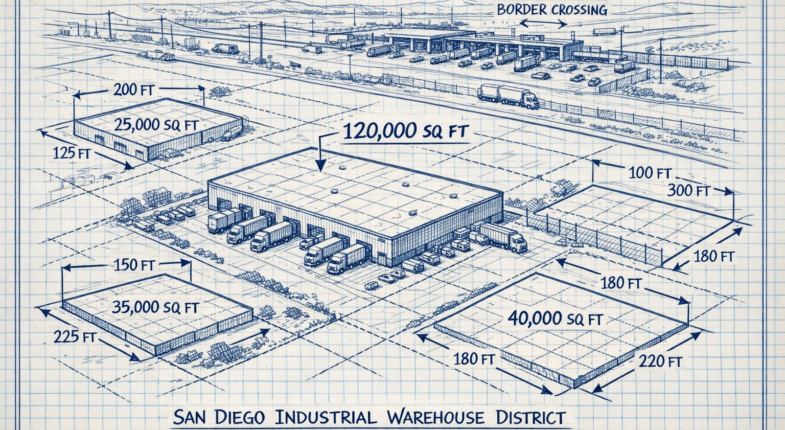
Industrial has been one of the steadiest performers in San Diego’s commercial market, and 2026 is keeping that trend. Vacancy across the county sits at historically low levels, and there’s no pipeline of new supply coming to change that picture anytime soon. Developable land in San Diego County is scarce, and that alone puts a floor under values.
Certain submarkets are drawing more attention than others. The South Bay corridor benefits from its proximity to the US-Mexico border, which makes it interesting for logistics, light manufacturing, and cross-border distribution. Poway, Otay Mesa, and Miramar continue to see steady deal flow as investors look to place capital in assets they expect to hold long-term.
A helpful anchor for where pricing stands: Realty Income Corporation purchased an industrial property in Poway in April 2026 - 133,844 square feet for $43.3 million, which works out to roughly $323 per square foot. It’s an actual data point that speaks to how much institutional buyers are willing to pay to get into San Diego industrial, even at a price per square foot that would have raised eyebrows a few years ago.
The logic behind deals like this isn’t hard to follow. San Diego benefits from strong logistics demand, a constrained land supply, and a geographic position that’s hard to replicate. Those things don’t disappear, and investors are pricing them in aggressively.
That said, it’s worth asking if the market has started to run ahead of the fundamentals. Rents have grown. But cap rates have compressed, and the room for error on acquisitions at $300 per square foot is thin. A buyer who counts on continued rent growth to justify today’s pricing is making a bet - not just an investment.
Whether that bet pays off may depend less on San Diego’s local prospects and more on the wider interest rate environment over the next 24 months.
San Diego Office and Life Sciences: A Market Splitting in Two
The office and life sciences segments in San Diego look very different right now, and that gap is worth mentioning. Life sciences vacancy has climbed to 26.9% as of Q2 2026, according to Cushman & Wakefield. Medical office, on the other hand, is sitting at just 6.2%.
Those two numbers are moving in opposite directions for a reason. Life sciences space expanded aggressively during the post-pandemic funding boom, and that new supply hit the market right as investor appetite pulled back. The result is a large pool of vacant lab and research space that’s taking longer to absorb than landlords had planned for.
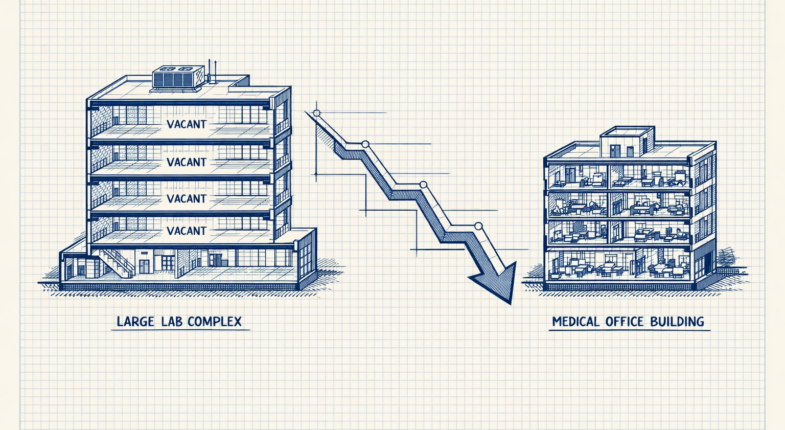
Medical office is a very different story. Demand from healthcare providers has stayed pretty steady, and the supply pipeline for that property type is much smaller. Tenants in this category sign longer leases and stay put, which keeps vacancy low even when the wider market softens.
Traditional office is under its own pressure. Asking rents have dropped to $3.39 per square foot per month, down 1.4% year-over-year. That decline is modest in percentage terms, but it reflects how much negotiating power has moved toward tenants in well-supplied submarkets.
For landlords, the main question is what to do with underperforming office or life sciences assets. Repositioning a lab building for a different use is expensive and not necessarily feasible given the physical requirements of that construction type. Holding vacant space while rents drift lower is also an expensive path. Neither choice is easy, and the right answer depends heavily on the submarket and the building.
| Segment | Vacancy Rate (Q2 2026) | Asking Rent ($/sq ft/mo) |
|---|---|---|
| Life Sciences | 26.9% | - |
| Medical Office | 6.2% | - |
| Office (Overall) | - | $3.39 |
San Diego Retail Real Estate: Who’s Leasing and Who’s Pulling Back
Retail gets written off quite a bit. But the numbers in San Diego tell a more interesting story. Vacancy rates have held pretty steady and asking rents in well-located centers have stayed firm through 2025 and into 2026. The narrative that retail is dying doesn’t hold up - look at where leases are actually signed.
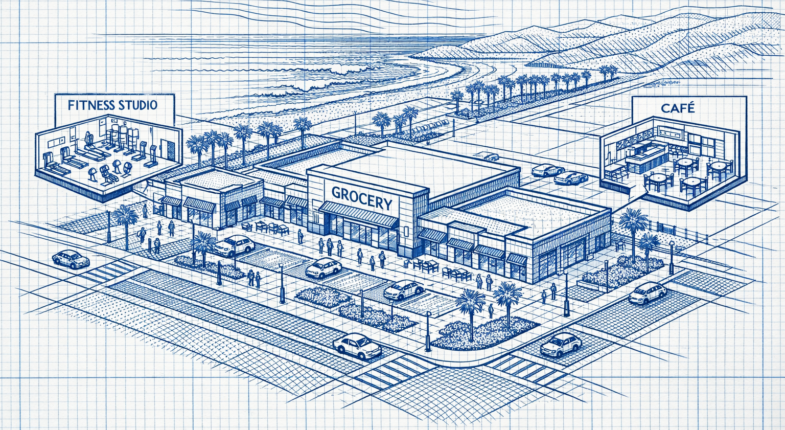
Neighborhood centers anchored by grocery stores or essential services are performing well. These are the strip centers and small-format hubs that serve everyday needs, and landlords with those anchors in place are not having a hard time filling surrounding bays. Food and drink tenants have been especially active, and fitness concepts continue to take space that legacy retailers left behind.
Experiential tenants are another bright find in these formats. Entertainment concepts, wellness studios, and service-based businesses have stepped in to fill formats that general merchandise retailers once dominated. These tenants draw foot traffic in a way that online shopping can’t replace, and that makes them interesting to landlords who want stable occupancy.
San Diego’s tourism economy gives retail in certain submarkets an actual cushion. Areas near the coast, Balboa Park, and the Gaslamp Quarter see steady consumer traffic that inland metros would envy. Population density in neighborhoods like North Park, Hillcrest, and Kearny Mesa also supports street-level and inline retail in ways that keep local landlords confident.

Where things have stalled is in older enclosed malls and large-format power centers with limited anchor draw. Spaces above 10,000 square feet without a strong traffic driver are harder to lease right now, and some landlords are actively repositioning those assets instead of waiting for a traditional retail tenant to appear.
The retail market in San Diego is not uniform. Smaller formats with the right location and the right tenant combination are doing well. Larger, dated spaces without a draw are the ones sitting empty.
San Diego Multifamily: Rising Supply, Resilient Pricing
Multifamily in San Diego tells two stories at once that seem like they shouldn’t go together. Vacancy is climbing as new supply hits the market. But sale prices are still holding strong. Both things are true at the same time, and it’s worth understanding why.
About 5,900 new units are expected to come online this year, and that’s pushing the vacancy rate toward 5.1%. The pressure is landing hardest on Class A properties, which are sitting at 6.4% vacancy. Class B and C assets are much tighter at 3.3%, because renters who feel the pinch of higher rents trade down instead of move out of the market entirely. Average rent growth is still positive - expected at 1.2% - but that’s a modest number compared to the last few years.
Softer occupancy at the top end hasn’t translated into softer prices. Class B asset pricing is up 40%, Class A properties now make up 30% of all sales activity, and the median sale price has crossed $500,000 per unit. Cap rates are averaging 4.7%, which tells you investors are still willing to pay a premium to get into this market.
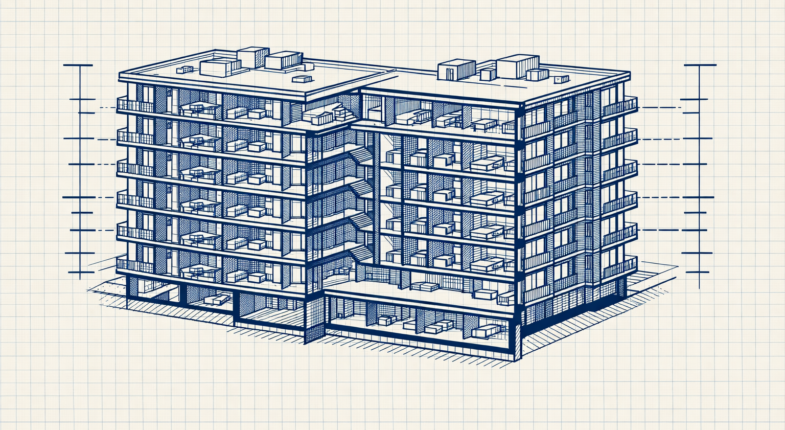
The reason vacancy and pricing can move in opposite directions is actually pretty straightforward. Investors aren’t buying based on what a property is doing - they’re buying based on what they think rents and occupancy will look like in three to five years. San Diego’s long-term supply constraints and population growth make buyers comfortable paying up now even when short-term fundamentals look soft.
That difference between operating performance and transaction pricing is something any buyer or seller needs to keep a close eye on as more units deliver through the rest of 2026.
Mixed-Use Development in San Diego: Where Density Meets Demand
Mixed-use is one of the most active conversations in San Diego development right now. East Village, Mission Valley, and Kearny Mesa are all seeing new projects get proposed or move through entitlements, and the format is attracting attention from developers who want to build density without putting all their eggs in one asset class.
That cross-asset exposure is a draw for investors too. A single mixed-use project can combine residential units, ground-floor retail, and sometimes office or life science space into one deal. That structure lets investors spread income risk across multiple tenant types instead of depending heavily on one.
The pitch deck version and the real-world execution version are two different things.
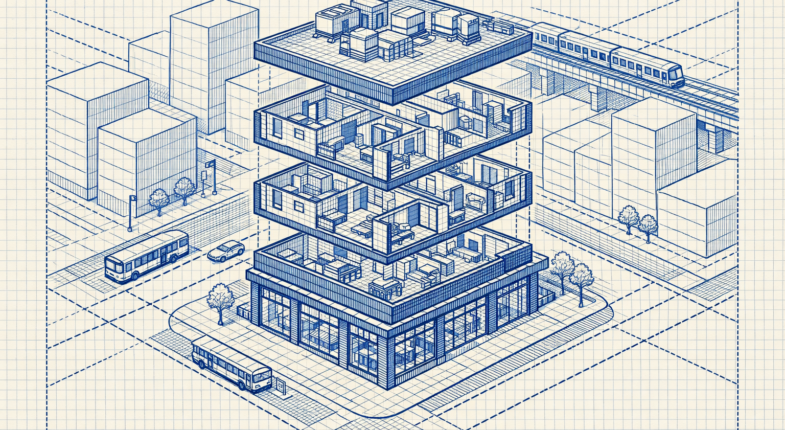
Entitlement timelines in San Diego remain slow and the permitting process can add months or years to a project before a shovel hits the ground. Construction costs have stayed elevated. That puts pressure on proformas that looked clean when rates were lower. The hardest piece to get right is usually the retail component. Ground-floor retail in a mixed-use building sounds great in theory. But it only works if the location has enough foot traffic to draw tenants who pay market rents. Getting tenant improvement allowances structured correctly becomes critical when those retail spaces finally do get leased.
Mission Valley has the transit infrastructure and the land to absorb new density. Kearny Mesa is attracting interest because of its proximity to employment centers and its somewhat more flexible zoning. East Village continues to mature as a walkable urban neighborhood, and that supports the street-level activation that makes retail in mixed-use buildings viable.
Developers going into mixed-use in 2026 need to be honest about which part of the project is carrying the deal financially. In most cases, it’s the residential component doing the heavy lifting. The retail is usually a requirement of the entitlement instead of a profit center on its own. For projects involving significant land and development decisions, understanding how each component pencils out separately matters more than the blended return.
Reading the San Diego CRE Market Without Getting Whiplash
Use this page as a baseline. The data points here align well with conditions as of early 2026. But this market moves - cap rates change, absorption numbers update, and new supply comes online. Investors who are outperforming are not relying on county-wide headlines. They’re tracking vacancy patterns by submarket, watching lease comps by asset type, and changing their thesis when the data changes. That discipline is what separates opportunistic positioning from guessing.
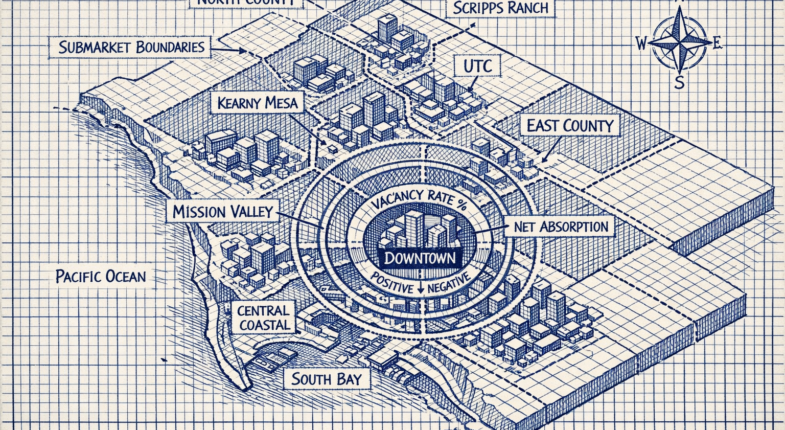
If you’re actively looking at a San Diego commercial deal - or trying to decide if now is the right time to move - the next step is into the asset-class numbers for the submarket you’re targeting. Broad strokes won’t get you to the right price. Granular data will.
FAQs
What is San Diego industrial real estate vacancy like in 2026?
San Diego industrial vacancy remains historically low, supported by constrained land supply and strong institutional buyer demand. A recent Poway sale at $323 per square foot reflects how aggressively investors are pricing into this market.
Why is life sciences vacancy so high compared to medical office?
Life sciences space expanded rapidly during the post-pandemic funding boom, flooding the market with supply just as investor appetite declined. Medical office, by contrast, has steady demand and a much smaller supply pipeline, keeping vacancy at just 6.2%.
Which retail formats are performing best in San Diego?
Grocery-anchored neighborhood centers and experiential tenants like fitness studios and food concepts are outperforming. Older enclosed malls and large-format spaces without strong anchor tenants are struggling to attract new leases.
Why are multifamily prices rising despite increasing vacancy?
Investors are buying based on long-term rent and occupancy expectations, not current conditions. San Diego's structural supply constraints and population growth make buyers comfortable paying premium prices even as short-term vacancy climbs.
What are the biggest risks in San Diego mixed-use development?
Slow entitlements, elevated construction costs, and underperforming ground-floor retail are the main challenges. In most projects, the residential component carries the financial weight while retail is often an entitlement requirement rather than a profit center.