1031 Exchange Mistakes That Cost San Diego Investors: Boot, Timelines, and Identification Errors
June 23, 2026
Multifamily vs. Commercial Real Estate in San Diego: Which Makes More Sense for Your Next Purchase
July 2, 2026
The numbers reflect that pressure. According to CBRE, the national average TI allowance dropped to $87.51 per square foot in 2024, down from $97.55 the year prior. That pullback suggests landlords are starting to recalibrate - not abandoning TI as a tool, but becoming more deliberate about how they deploy it. The era of throwing large allowances at deals just to fill space is giving way to something more disciplined.
That discipline is what this post is about. TI allowance negotiation, from the landlord’s side, isn’t a conversation about how little you give - it’s a conversation about how to structure what you do give so it works in your favor financially, protecting your yield and limiting your downside exposure, so that every dollar you put into a tenant’s space is accounted for in the economics of the deal.
If you’re looking at a new tenant proposal or heading into a renewal conversation with an existing tenant, what follows helps you think about TI the way it deserves to be treated: not as a cost of doing business, but as a capital choice with a return attached to it.
Key Takeaways
- National average TI allowances dropped from $97.55 to $87.51 per square foot in 2024, signaling landlords are becoming more disciplined.
- TI allowance caps should scale directly with lease length; short-term leases with generous allowances often result in unrecoverable landlord losses.
- Treat TI as a yield-on-cost investment: divide incremental rent generated by total TI spent to evaluate whether the deal makes financial sense.
- Lease language must include a burn-down schedule making unamortized TI balances an explicit repayment obligation if tenants exit early.
- Bonus depreciation for qualified improvement property is phasing down annually through 2027, making build-out structure decisions increasingly tax-sensitive.
What a Commercial Tenant Improvement Allowance Actually Covers
A tenant improvement allowance is a sum the landlord agrees to contribute toward making a space work for a tenant - it pays for construction and finishing work inside the leased premises - not the building itself.
The distinction between base building work and tenant improvements matters more than most landlords expect. Base building work includes things like the structural shell, the core HVAC system and the main electrical panels; it’s the landlord’s responsibility regardless of any tenant deal. Tenant improvements, in contrast, are the build-out elements that make the raw space functional for a particular occupant.
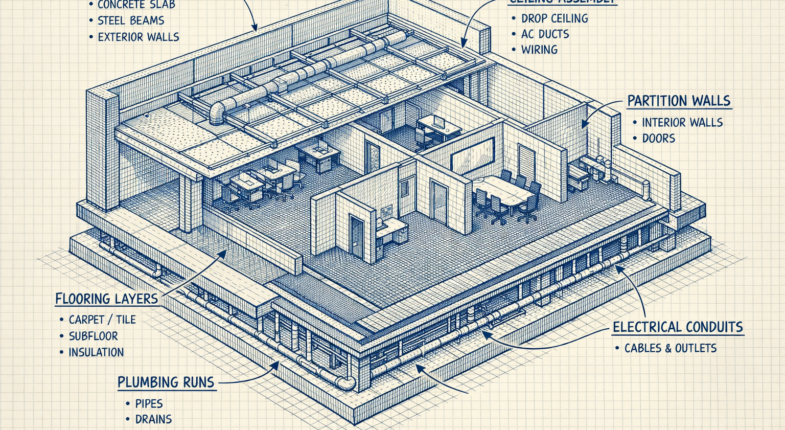
Typical eligible costs fall into a recognizable set of categories. Flooring and ceiling finishes, interior partition walls, electrical distribution within the suite, plumbing runs to bathrooms or break rooms and HVAC distribution from the main trunk lines - these are the core line items that belong in a TI budget. Demising walls, which separate one tenant’s space from another, are also a normal part of this.
What doesn’t belong in the allowance is where things get messy. Furniture, standalone fixtures, audiovisual equipment and IT infrastructure are tenant-owned assets - not improvements to the property. Landlords who don’t draw a hard line on this end up funding a tenant’s office setup instead of their own estate.
Soft costs are another area to watch. Permit fees, design fees and project management charges can creep into draw requests if the lease language doesn’t address them. Some landlords allow a portion of soft costs as reimbursable - it’s a reasonable call - but it needs to be a deliberate one, not something that happens by default.
A loose or vague allowance definition creates friction at the draw stage and opens the door to disputes throughout the lease term about what was promised, what was delivered and who owes what. The cleaner the definition at the start, the less room there is for that disagreement later. Understanding key commercial lease clauses can help landlords avoid these ambiguities from the outset.
A clear definition here makes every other part of a TI negotiation easier to manage.
Turnkey Build-Outs vs. Dollar Allowances - Which Puts You at More Risk
There are two ways to structure how tenant improvements actually get done. In a turnkey build-out, the landlord hires the contractor, manages the project, and hands the tenant a finished space. With a dollar allowance, the tenant takes the wheel - they manage construction and the landlord reimburses them up to an agreed amount.
Each structure puts the danger somewhere different, and that matters quite a bit depending on who your tenant is.
Turnkey gives you more control over what gets built and what it costs. You pick the contractor, you approve the scope, and you’re not waiting on reimbursement requests to know where the money went. The trade-off is that you take on contractor risk. If the build runs late or goes sideways, that’s your problem to solve.
Dollar allowances flip that. The tenant manages the build, which takes the day-to-day burden off you. But it also opens the door to cost overruns the tenant can’t cover, disputes over what qualifies for reimbursement, and draw requests that are hard to verify. A well-capitalized national tenant is able to manage that responsibility. A smaller local tenant might not have the experience or the cash flow to manage a construction project cleanly.
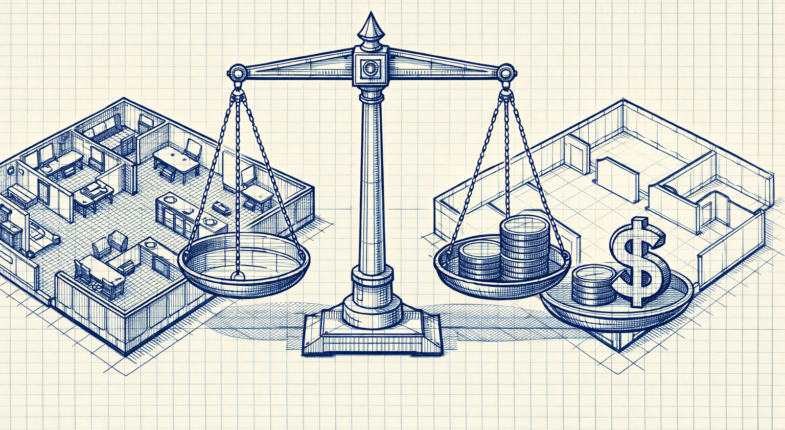
Lease length plays into this too. On a shorter lease, a turnkey build-out lets you control what goes into the space since you’ll be re-leasing it sooner than you’d like to think. On a longer lease, a dollar allowance works pretty well because the tenant has more time to justify the investment and skin in the game to get it right.
Market conditions also shape which structure makes sense. In a hot leasing market where tenants have leverage, dollar allowances become a common ask because tenants want flexibility in how they build. In a slower market, you have more room to push for a turnkey strategy where you hold the controls. California landlords navigating these decisions should also think carefully about how improvement clauses interact with the broader lease terms.
Neither structure is automatically safer. The right choice depends on the tenant’s financial strength, the lease duration, and how much construction risk you are able to manage. If a tenant does fall short on obligations, understanding the eviction process in California is worth knowing before a situation escalates.
How Lease Term Length Should Set Your TI Cap
The single biggest variable in picking how much TI to spend is how long the tenant is staying. A 10-year lease gives you a full decade to recover that investment through rent. A 3-year lease gives you almost nothing.
The math behind this is easy. If you spend $90 per square foot on improvements and the tenant leaves after three years, you’ve recovered a fraction of that cost. If the same tenant signs a 10-year deal at strong rent, that same $90 per square foot starts to look reasonable - because you have time to earn it back.
One helpful way to imagine this is to amortize your TI budget over the lease term and see what that costs per year. Take a 10,000 square foot space where you’re thinking about an $80 per square foot allowance; it’s $800,000 total. Spread over 10 years, you’re absorbing $80,000 per year - and your rent revenue is working to cover it the whole time. Now compress that same deal to three years and you’re trying to recover $800,000 in 36 months. The numbers stop working fast.

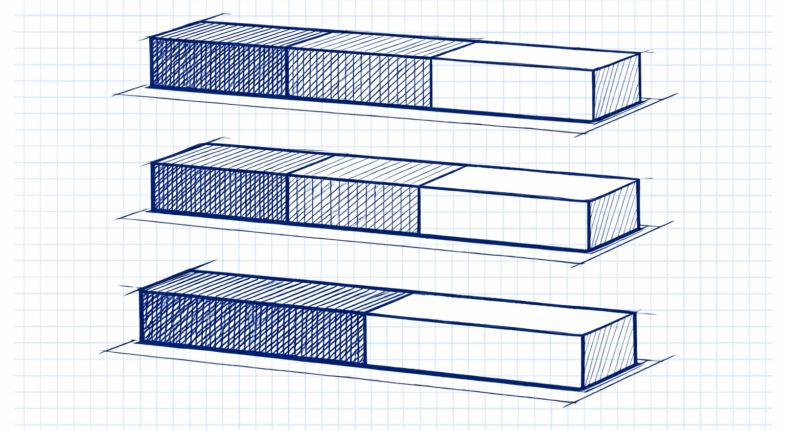
The following comparison makes this tangible.
| Lease Term | TI Allowance (10,000 SF) | Total TI Cost | Annual Recovery Needed |
|---|---|---|---|
| 10 years | $80/SF | $800,000 | $80,000/year |
| 5 years | $40/SF | $400,000 | $80,000/year |
| 3 years | $80/SF | $800,000 | $266,667/year |
That third row is where deals go wrong. A flat TI number across every lease term - regardless - is one of the most expensive mistakes a landlord can make in negotiation. Tenants will accept a short-term lease with a generous allowance every time if you let them, and you’ll be the one absorbing the loss.
Your TI cap should move in proportion to lease length. A shorter term means a lower ceiling, full stop. If a tenant wants the full allowance, they need to commit to the term that makes it financially viable for you to give it.
Thinking About TI as a Yield-on-Cost Calculation, Not a Line Item
Most landlords treat tenant improvement allowances as a cost to cut back on. That framing puts you in the wrong headspace from the start. TI is a capital deployment decision, and it deserves the same analytical rigor you’d apply to any other investment on the property.
The framework to use here is yield-on-cost. The basic idea is easy: divide the incremental rent a TI package generates by the total TI investment. If a $50 per square foot allowance supports a rent premium of $5 per square foot per year over a ten-year lease, you’re looking at a 10% yield on that capital; it’s a number you review against your return targets.
This changes the negotiation entirely. Instead of asking how to get the TI number down, you start asking if this TI spend produces enough rent to justify the outlay. Sometimes a higher allowance is the right call because it supports a meaningfully higher rent. Sometimes the numbers don’t work at any TI level and the deal structure itself needs to change.
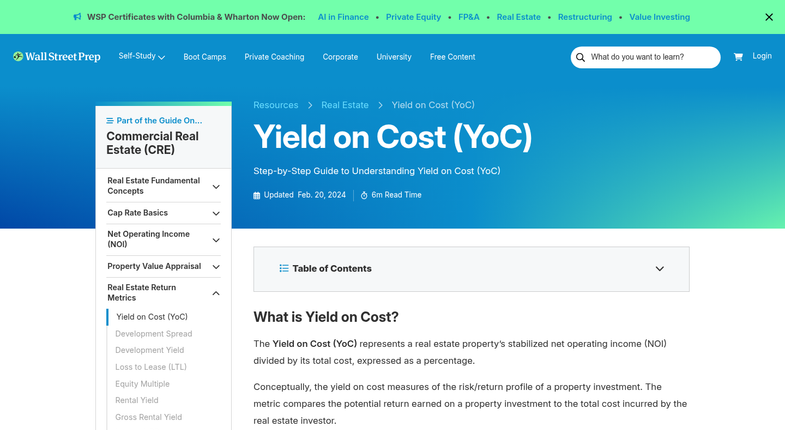
Institutional landlords think this way almost by default. They underwrite TI spend against its cap rate results - a higher rent helps with net operating income, which flows directly into property value. That connection between TI and long-term asset performance is something smaller landlords can benefit from internalizing too.
An easy table helps to see this in practice.
| TI Allowance ($/SF) | Rent Premium ($/SF/yr) | Lease Term | Yield on TI |
|---|---|---|---|
| $30 | $3.00 | 10 years | 10.0% |
| $50 | $4.00 | 10 years | 8.0% |
| $50 | $5.50 | 10 years | 11.0% |
The point is not to hit a magic number - it’s to know what return you need and then build the deal backward from there. If the rent premium a tenant will accept doesn’t get you to an acceptable yield, you have your answer before you sign anything. Understanding how commercial properties are valued in California can help you frame these conversations with more confidence.
Protecting Yourself When a Tenant Breaks the Lease Early
A tenant improvement allowance is basically a loan you never call a loan. That framing matters quite a bit when a tenant walks out in year three of a ten-year lease. If the lease doesn’t have the right language in it, you could be left holding $60 to $80 per square foot in unrecovered capital with no path to get it back.
The fix starts with a burn-down schedule, an easy calculation built into the lease that tracks how much of the TI allowance remains unrecovered at any point in time. As the tenant pays rent and the lease progresses, that number decreases. If they leave early, the remaining balance is the repayment amount they owe you - and the lease needs to say that plainly.
The unamortized TI balance has to appear as an explicit repayment obligation in the lease itself. Not buried in an exhibit and not implied - it should state the formula, reference the burn-down schedule, and spell out that early termination triggers full repayment of the outstanding amount. If you don’t have this, your position in a default scenario is much weaker than it needs to be.
Beyond the lease language, you also want security behind that obligation. A personal guarantee with TI repayment is one way to do it. A letter of credit sized to cover the maximum unrecovered balance is another option and can be more helpful with a corporate tenant where a personal guarantee isn’t on the table.
Some landlords set the letter of credit at the full TI amount at lease signing and let it step down annually in line with the burn-down schedule. That way your security tracks your exposure instead of staying fixed at the original number.
These provisions feel unnecessary when a tenant signs - everything looks positive at that point. But lease defaults don’t announce themselves in advance, and a well-structured TI repayment clause is what separates a recoverable situation from a permanent loss.
Tax Considerations Landlords Should Factor Into TI Decisions
Most landlords think about TI allowances as a cost to manage. But the tax side of the equation can change how you structure a deal - and the timing matters more than it has in years.
Bonus depreciation for qualified improvement property has been stepping down since 2023 - it was 80% in 2023, dropped to 60% in 2024, and it declines by 20% each year until it reaches zero in 2027. Landlords who own the build-out - usually in a turnkey deal - can still capture some depreciation benefit. But that window is closing.
It’s worth factoring in whether to fund a build-out directly or hand the tenant an allowance and let them manage the work. In a turnkey structure, you own the improvements and can depreciate them. In a straight TI allowance structure, the tenant owns the work they do, which means the depreciation benefit may sit with them instead of you.
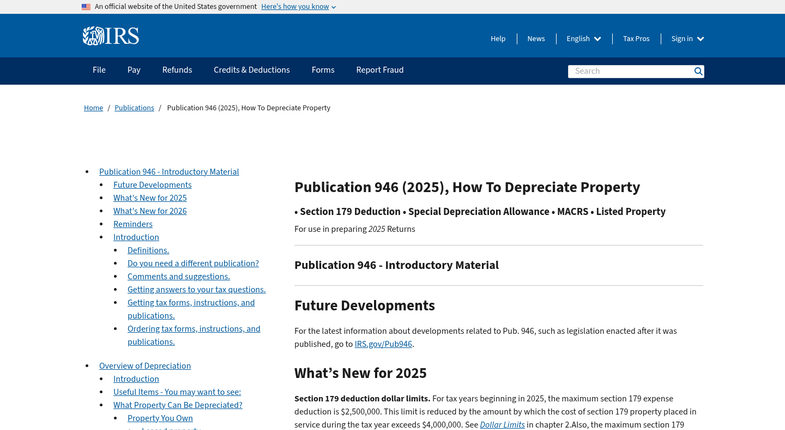
That’s not automatically a reason to favor one structure over the other. But it’s a reason to run the numbers before you finalize a deal. A CPA who works with commercial real estate can tell you how much depreciation you’d capture based on your tax position and the deal timeline. The right question to ask them is how the build-out structure can affect your after-tax return - not just your gross yield.
The connection to deal economics is direct. If you’re spending $80 per square foot on a build-out and you can write off a meaningful portion of that in year one, the cost of that TI drops. That changes how you think about the trade-off between funding the work yourself versus adjusting rent to compensate. Understanding how these decisions affect your NOI is just as important as the depreciation math.
None of this needs to be complicated. The tax math on commercial real estate is in flux right now, and deals signed in the next year or two will land in a different environment than deals signed in 2027 and beyond. Get that input before you finalize your structure.
What to Push Back On in a Tenant’s TI Proposal
When a tenant submits a TI proposal, it won’t always be unreasonable on the surface. The numbers might look clean and the scope might sound professional. But there are a few places where landlords routinely give up more than they should, and knowing where to look makes a difference before anything goes to legal.
Start with the soft cost budget. Tenants will sometimes load this line with architecture fees, project management, permit costs, and consulting costs that together eat up 20-30% of the total allowance. Some of those costs are fair to include. But a vague soft cost line with no itemization is worth pushing back on every time - ask for a full breakdown before you agree to fund it.
Watch out for requests to cover non-permanent improvements. Furniture, modular walls, plug-in equipment, and branded signage are things the tenant takes with them when the lease ends. You shouldn’t be financing those. The allowance should attach to the space itself - not the tenant’s operations.
The “market rate” argument deserves some scrutiny too. Tenants will point to market benchmarks to justify their ask. But those numbers can vary quite a bit by market. Class A office TIAs in Manhattan and San Francisco average around $128-$135 per square foot. In Dallas or Houston, that same figure drops to $30-$50 per square foot. A tenant in a mid-tier suburban market asking for a coastal benchmark isn’t making a market argument - they’re making a negotiating one.
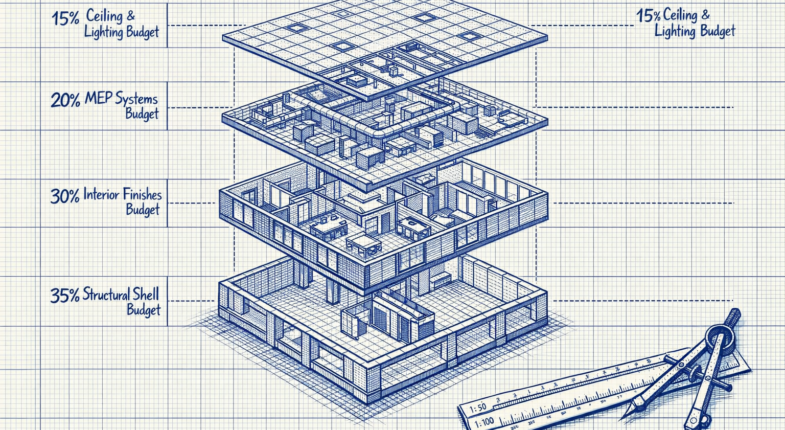
Vague scope definitions are another place to tighten things up. If the proposal says “office buildout” without specifying finishes, ceiling type, or MEP work, you have no control over what gets spent. Scope creep can add cost fast. Nail down the spec before you sign. Understanding strategies for negotiating commercial leases can help you hold your ground on scope and cost before the lease is drafted.
A few questions worth asking at the proposal stage: What is the itemized soft cost breakdown? Which improvements are permanent? What is the basis for the allowance figure - square footage, bids, or a market comp? Getting answers here puts you in a much stronger position when the lease is being drafted. If you’re working with a broker, a qualified commercial real estate agent in San Diego should be able to help you benchmark these numbers against realistic local comps.
Structure First, Negotiate Second - That’s How You Protect the Return
Getting TI structure right is what separates strong returns from eroded ones. Every dollar of TI you deploy should be working toward an outcome: a stronger tenant, a longer term, a higher net rent, or a more defensible asset. If you can’t trace the allowance back to one of those results, the structure needs another pass before you sign anything.
The margin for loose TI underwriting is only getting thinner. Construction costs remain elevated, and as bonus depreciation continues to phase down, the tax cushion that once softened over-generous allowances is shrinking. Landlords who build disciplined TI structures now - not in response to market pressure, but as standard practice - will be the ones who protect their yields when the next cycle demands even more creative deal-making. A well-structured TI can become one of the most powerful tools in your leasing arsenal. A reactive one is profit handed across the table.
FAQs
What did average TI allowances drop to in 2024?
According to CBRE, the national average TI allowance dropped to $87.51 per square foot in 2024, down from $97.55 the year prior, signaling landlords are becoming more disciplined about how they deploy capital.
How should lease term length affect your TI cap?
TI caps should scale directly with lease length. A shorter lease term means a lower TI ceiling, since you have less time to recover the investment through rent. Offering full allowances on short-term leases often results in unrecoverable losses.
What is yield-on-cost and why does it matter?
Yield-on-cost divides the incremental rent generated by the total TI spent. It helps landlords evaluate whether a TI package produces enough return to justify the investment, shifting the focus from cutting costs to making smarter capital decisions.
What costs should NOT be included in a TI allowance?
Furniture, modular walls, plug-in equipment, branded signage, and IT infrastructure are tenant-owned assets and should not be funded through a TI allowance. These items leave with the tenant and provide no lasting value to the property.
How can landlords protect themselves if a tenant breaks the lease?
Landlords should include a burn-down schedule in the lease that tracks unrecovered TI balances, with an explicit repayment obligation triggered by early termination. A personal guarantee or letter of credit sized to the maximum unrecovered balance adds further protection.