Multifamily vs. Commercial Real Estate in San Diego: Which Makes More Sense for Your Next Purchase
July 2, 2026
Commercial Real Estate Due Diligence Checklist: 12 Things to Verify Before You Close in California
July 10, 2026
Early 2026 transaction volume in select San Diego submarkets has picked up in ways that weren’t visible twelve months ago. Certain office subtypes - medical, creative, and smaller boutique buildings - are posting rent figures and absorption numbers that look nothing like the struggling Class B towers people picture when they think about post-COVID office. That doesn’t mean the recovery is clean or uniform. Some pockets of the market are legitimately distressed, and buyers who don’t understand the submarket-level differences are walking into danger.
This guide is built for investors who want to make a data-educated choice instead of a headline-driven one. I’ll talk about vacancy rates across Downtown, UTC, and Kearny Mesa, find which office subtypes are holding their value and which are still under pressure, and look at what cap rates buyers are actually accepting in exchange for taking on that uncertainty. The goal isn’t to make the case for or against office building investment in San Diego - it’s to give you an accurate picture of what the market actually looks like so you can choose for yourself.
Key Takeaways
- Downtown San Diego office vacancy hit 38.37% in Q4 2024, while South San Diego sits at just 3.37%.
- Medical office and boutique creative spaces are outperforming, as healthcare tenants cannot work remotely.
- Over half of San Diego office leases signed were under 5,000 square feet, reflecting widespread tenant downsizing.
- Q1 2026 transaction volume surged 186.4% year-over-year, but average price per square foot dropped sharply.
- Successful investing requires submarket-level research, not city-wide assumptions, with attention to tenant mix and lease terms.
Vacancy Rates by Submarket Tell Very Different Stories
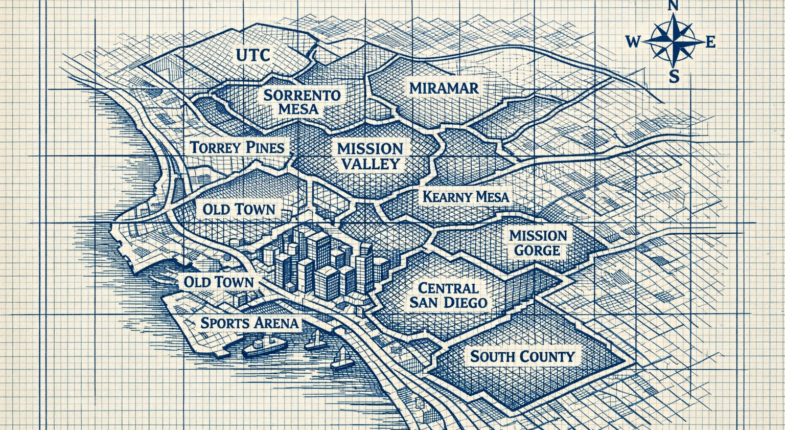
San Diego’s office market isn’t one market - it’s a collection of very different neighborhoods, and the vacancy numbers reflect that. Overall, vacancy has climbed roughly 400 basis points above pre-pandemic levels. But that average masks some dramatic differences from one submarket to the next.
Downtown San Diego sits at about 38.37% vacant as of Q4 2024, according to data from Moody’s and Voit Real Estate Services; it’s a hard number to look at. More than one in three square feet of Downtown office space is sitting empty right now.
The reasons aren’t mysterious. Downtown’s tenant base historically leaned on financial services, law firms, and government-adjacent businesses - sectors that have been slow to return to full office schedules. The area also has limited parking relative to suburban alternatives, and it’s not walking distance from the biotech and life science corridors that have kept other parts of the city busier.
UTC and Kearny Mesa show something different. These submarkets have held up noticeably better, partly because they’re closer to the research and biotech activity concentrated around Torrey Pines and Sorrento Valley. Tenants in those industries tend to need lab-adjacent or collaborative space, which pulls demand toward the mid-county areas instead of Downtown.
Then there’s South San Diego; vacancy sits around 3.37%, and it’s not a typo. Supply there is limited and the tenant mix is more industrial-adjacent, which keeps absorption pretty steady even when wider office demand softens.
| Submarket | Approximate Vacancy Rate (Q4 2024) |
|---|---|
| Downtown San Diego | 38.37% |
| UTC | Mid-teens (estimate) |
| Kearny Mesa | Mid-teens (estimate) |
| South San Diego | 3.37% |
What would actually make someone buy a Downtown building at 38% vacant? Some investors see a basis play - buying at a discount deep enough that even modest lease-up gets them to acceptable returns. Others are betting on conversion potential or a longer-term rebound in urban office demand. Neither thesis is unreasonable. But they require a very different risk tolerance than buying into a tight submarket like South San Diego.
Which submarket you’re in is the foundation of any underwriting conversation worth having.
Which Office Subtypes Are Leasing - and Which Are Sitting Empty
The submarket data tells you where vacancy is low. But it doesn’t tell you why. The reason some buildings are leasing well has quite a bit to do with what type of product they are.
Medical office is one of the strongest performers in San Diego right now. Healthcare tenants can’t do their work remotely, so demand for clinical and medical office space has held up in ways that traditional corporate tenants basically haven’t matched. Buildings near hospital campuses or in established healthcare corridors tend to post much tighter vacancy than the market average.
Creative and boutique office space is also drawing tenants at a faster rate than standard commercial product. Smaller firms, creative agencies, and professional services tenants are gravitating toward spaces that feel different - lower ceilings, exposed materials, flexible layouts, and buildings with character. Tenants are using their office space as a tool to bring people in, and a generic 1990s interior doesn’t help them do that.
The small-suite story is worth paying close attention to. More than half of all office leases signed in San Diego have been under 5,000 square feet; it’s an actual data point for any investor to sit with. Tenants are downsizing their footprints, splitting up space across smaller offices, or taking short-term leases on suites instead of committing to large floors.
This gives you a contrast with large-floor-plate Class B buildings. Those properties were built for single tenants or anchor users who would take 20,000 to 50,000 square feet at a time. That tenant pool has contracted. When a big occupant leaves, landlords are finding it hard to backfill that space with one replacement - and subdividing a 40,000 square foot floor is expensive and not necessarily structurally easy.
For an investor, the building type matters as much as the location. A 50,000 square foot single-tenant building in a strong submarket can still carry danger if the lease rolls and the tenant leaves. A multi-suite flex property with eight to twelve smaller tenants spreads that danger across leases and aligns better with how tenants are actually picking space right now.
What Buyers Are Actually Paying for San Diego Office Right Now
In 2024, San Diego recorded 29 office sales totaling $703.7 million at an average of $204.77 per square foot. That number tells you quite a bit on its own - but the Q1 2026 data makes it more interesting. Transaction volume surged 186.4% compared to Q1 2025. But the average price per square foot landed at $215.21, down sharply from $462.67 in the same quarter a year prior.
That difference between volume and price is worth sitting with for a bit. More buyers came to the table. But they paid less per foot; it’s not necessarily distress - it can go hand in hand with a market that has reset its expectations after years of inflated valuations.
The word “recalibration” gets used quite a bit in commercial real estate and it can sound like a polite way to say things went wrong - it’s more accurate to read it as buyers and sellers finally agreeing on a new range - one that aligns with leasing realities instead of pre-pandemic assumptions about occupancy.

| Period | Avg Price Per SF | Notes |
|---|---|---|
| Full Year 2024 | $204.77 | 29 transactions, $703.7M total volume |
| Q1 2025 | $462.67 | Lower volume, higher per-foot pricing |
| Q1 2026 | $215.21 | Volume up 186.4% year-over-year |
Cap rates have expanded alongside this price movement. Buyers are demanding more return to take on assets that may have partial vacancy or short-term leases; it’s a rational response - and it puts pressure on sellers who are still anchored to older valuations. How commercial properties are valued in California matters more than ever when sellers and buyers are working from very different baselines.
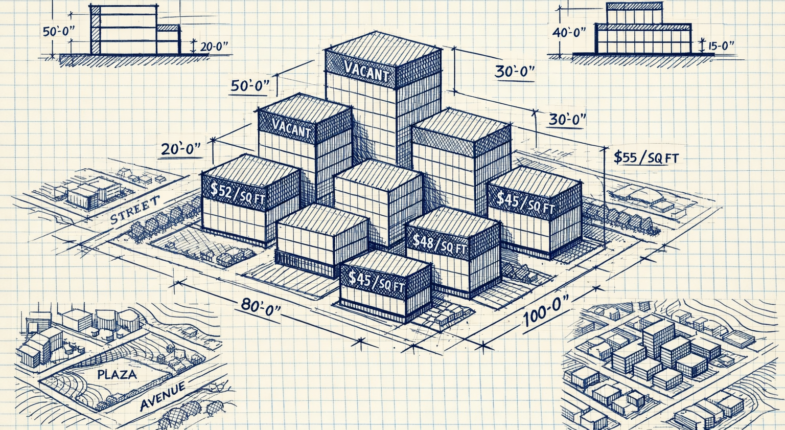
The harder question is what a lower price per foot actually means for a deal. A building at $180 per square foot could be a basic entry point or a money pit depending on the lease structure, the tenant quality, and what it will cost to get the vacant space leased and operational. How you structure tenant improvement allowances can make or break the return on that vacant space.
Lower sticker prices draw attention and that attention isn’t always well-directed. The raw numbers only tell you what someone paid - they don’t tell you what that buyer was counting on to make it work. Working with a knowledgeable commercial real estate agent in San Diego helps ensure you’re evaluating the full picture, not just the headline price.
How to Read a San Diego Office Deal in Today’s Environment
The variables that matter most in San Diego office deals have changed quite a bit since 2019. Back then, investors could underwrite rent growth with basic confidence and use strong absorption patterns to carry a deal. That playbook doesn’t apply the same way, so the questions asked at the start of a deal need to align with where the market actually is.
Lease term stability is one of the first things to look at closely. A building with tenants rolling in 18 months is a very different bet than one with five-year leases in place, and that’s also the case in submarkets where re-leasing timelines have stretched out. You want to know who the tenants are, what industry they’re in, and if their space usage has changed recently. A defense contractor with a long-term government contract is not the same as a mid-size tech company that cut its footprint in 2023.
Floor plate configuration matters more than it used to. Tenants looking for space are attracted to efficient, flexible layouts instead of large open floors that made sense for older office cultures. A building that works for smaller or mid-size tenants to subdivide is easier to lease than one designed for a single large occupant. That can affect your vacancy assumptions and how long you might carry empty space between tenants.
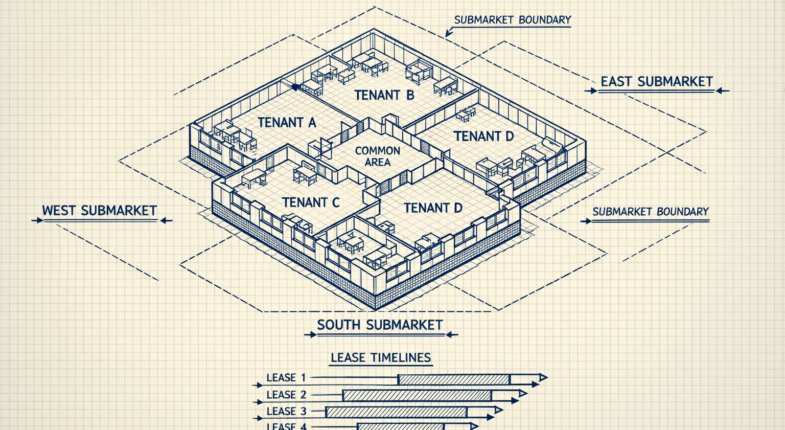
Submarket location is worth thinking through. Del Mar Heights and UTC have held up better than Downtown San Diego, and that gap is not trivial when you’re building a rent assumption into your model. San Diego’s average asking rent of $45.23 per square foot is well above the national average. But that number blends very different submarkets together. Applying that figure to a Class B Downtown asset is where underwriting can go wrong in a hurry.
Ask your broker directly what has actually closed nearby in the last six months and at what price per square foot. Listing prices and sale prices are not necessarily close to each other in this environment.
The pitfall to watch for is buying into a value-add story that depends on rent growth arriving on a particular timeline. In some parts of San Diego that growth may come. But in others the path to stabilized occupancy is longer and more expensive than the proforma suggests.
San Diego Office Isn’t Dead - But It Rewards the Selective Buyer
The uncertainty is genuine and shouldn’t be waved away. Downtown’s recovery is still uneven, large floor plates are harder to lease than they’ve been in a decade, and the wider remote and hybrid work question hasn’t resolved itself. But alongside that uncertainty sits a market where medical office fundamentals remain strong; boutique creative product in the right submarkets is commanding rents that outpace the national average; and where a constrained development pipeline means well-positioned assets face less new competition than investors in other metros. That combination doesn’t make San Diego a sure thing - it makes it a market where preparation pays off more than elsewhere.
A good San Diego office investment in this environment is one built on submarket-level research - not city-wide assumptions - that accounts for tenant mix and lease term exposure, not just cap rate on day one. And critically, it’s well-informed by someone who has been inside these buildings and these deals recently - a local broker who knows which submarkets are tightening, which landlords are conceding, and where the next wave of tenant demand is most likely to land. If you’re serious about this market, that conversation is the logical next step.
FAQs
What is Downtown San Diego's current office vacancy rate?
Downtown San Diego's office vacancy rate hit 38.37% in Q4 2024, making it one of the most distressed submarkets in the city. This is largely due to its tenant base of financial and legal firms being slow to return to full office schedules.
Which San Diego office subtypes are performing best right now?
Medical office and boutique creative spaces are outperforming the broader market. Healthcare tenants cannot work remotely, keeping medical office demand strong, while smaller creative firms seek flexible, character-driven spaces over generic commercial buildings.
How has San Diego office transaction volume changed recently?
Q1 2026 transaction volume surged 186.4% year-over-year, but average price per square foot dropped sharply from $462.67 to $215.21, reflecting a market reset rather than a full recovery.
Why does submarket location matter for office investors?
Vacancy rates vary dramatically across San Diego, from 38.37% Downtown to just 3.37% in South San Diego. Applying city-wide averages to individual deals can lead to seriously flawed underwriting assumptions.
What lease factors should investors prioritize in today's market?
Investors should closely evaluate lease term stability, tenant industry, and floor plate flexibility. Tenants rolling within 18 months pose significant risk, especially in submarkets where re-leasing timelines have extended considerably post-pandemic.