Commercial Property Insurance in California: What Landlords Actually Need and What They Often Skip
August 4, 2026
San Diego Commercial Real Estate in 2026: What Each Asset Class Is Doing Right Now
August 11, 2026
The numbers give that thesis some weight. According to Real Capital Analytics data from Q4 2024, San Diego recorded roughly $55.4 million in self-storage transaction volume over the trailing twelve months. The market spans approximately 83 buildings and 6.6 million square feet of rentable space distributed across a county where new development faces actual zoning and entitlement friction. That supply constraint, layered on top of a population that moves frequently and lives in smaller footprints than most Sun Belt metros, creates the demand floor that income investors find legitimately helpful.
What makes self-storage interesting is also what makes it easy to misprice. The asset class is leased differently from office or retail, managed differently from multifamily, and carries operational levers that most commercial investors have never had to think about - things like unit combination optimization, rate management software, and the outsized results that a single climate-controlled conversion can have on net operating income. Anyone thinking about whether to buy a self-storage facility in California needs to know those mechanics before they underwrite a deal, because the assumptions that work for other property types will lead you to the wrong number here.
This piece walks through the market fundamentals that define San Diego’s self-storage sector, how these assets are leased and what operators actually do to run them well, what a legitimate value-add acquisition looks like in this market, and which operators are active enough to matter when thinking about competition or exit strategy. If you are already in commercial real estate and self-storage is surfacing in your deal flow, what follows was built so you can evaluate it on its own terms.
Key Takeaways
- San Diego’s self-storage demand is structurally driven by military relocations, dense apartment living, and annual university population turnover.
- Local cap rates run 50-150 basis points below national averages, making NOI accuracy critical since small errors cause significant valuation swings.
- Economic occupancy - not physical occupancy - is the number that matters, as concessions and delinquencies can significantly distort actual revenue collected.
- Mismanaged independent facilities with outdated pricing, paper leasing, and unreported income represent the primary acquisition opportunity for smaller investors.
- Value-add upside exists through revenue management software, climate-controlled conversions, and online rentals, but buyers must underwrite realistic stabilization timelines.
Why San Diego’s Self-Storage Market Behaves Differently Than the National Picture
San Diego has a few structural idiosyncrasies that make its self-storage market worth understanding on its own terms. The demand here is driven by a steady rhythm of military relocation, dense housing with little to no garage space, and a university population that moves in and out every year.
The military connection is a consistent and steady demand driver. Bases like MCAS Miramar and Naval Base San Diego generate a non-stop flow of personnel who need short-term storage during reassignment; it’s not discretionary demand - those renters need a unit whether the economy is up or down.
Housing density adds another layer. A large share of San Diego residents live in apartments or condos, which means there’s nowhere to put a bike, seasonal gear, or extra furniture. Self-storage fills a gap that the housing stock doesn’t; it’s a structural demand driver - not a cyclical one, and it holds up across most submarkets in the county.
Then there’s the university churn. Schools like UCSD and USD bring in students who need storage between leases or during summers - it’s a predictable seasonal pattern that keeps occupancy from dropping too sharply in the slower months.
On the supply side, Yardi Matrix data shows a 3.1% month-over-month increase in new self-storage supply. That number deserves some attention before reading too much into the demand story above.
Undersupply has historically worked in investors’ favor in this market. That can help to sustain strong rental rates and keep vacancy low. But rising supply figures mean that benefit could narrow. A buyer entering now needs to look at what’s in the development pipeline for their target submarket - not just what conditions look like today.
The more helpful question is this: is the latest undersupply a genuine tailwind for a new acquisition, or is it a signal that developers have already seen the opportunity and are catching up? The answer will be different in Chula Vista than Mission Valley.
San Diego is not a monolithic market. Performance at the metro level can mask submarket variation, and a buyer who treats the city as one uniform opportunity is working with an incomplete picture.
How Self-Storage Is Valued - and Where Buyers Misread the Numbers
Cap rates for self-storage have climbed nationally from around 4.3% to roughly 5.9% over the past few years. San Diego hasn’t followed that same path. Local cap rates have compressed 50 to 150 basis points below national averages, which means buyers here are paying more per dollar of income than their counterparts in most other markets. That gap isn’t a flaw in the market - it reflects the land constraints and demand dynamics of the local area - but it does mean the numbers need to be read carefully.
Valuation in self-storage is built on net operating income, and NOI here works a little differently than in other commercial asset types. The first distinction to know is between physical occupancy and economic occupancy. A facility can show 92% of its units as occupied while collecting rent on far less of them - because of concessions, delinquencies, or units locked out pending payment. Economic occupancy reflects what the property actually earns, and it’s the number that matters for underwriting.
Ancillary income can add another layer. Truck rentals, tenant insurance programs, and packing supply sales can each contribute actual revenue, and well-run buildings lean into these streams. But trailing 12-month financials don’t always make it easy to separate this income cleanly from base rent. When a buyer takes those numbers at face value without disaggregating the sources, they’re left with a blurry picture of what the asset actually produces on its own.
Management quality distorts the trailing financials more than most buyers account for. A facility run by an owner-operator with low costs and personal involvement will show a very different cost structure than the same property would under third-party management. That delta can swing NOI by a meaningful margin once the new owner transitions operations. Buyers who apply market-rate management costs to the seller’s trailing numbers will get a more accurate picture of stabilized performance.
In a compressed cap rate environment like San Diego, these distinctions carry weight. A small error in NOI - even $30,000 to $40,000 - translates to significant buy price variance when dividing by a cap rate. The math is unforgiving, and the trailing 12 don’t tell everything without some digging.
What a Value-Add Self-Storage Acquisition Actually Looks Like in Practice
A lot of deals that buyers walk away from aren’t bad assets. They’re just poorly run ones. That distinction matters, because a mismanaged self-storage facility can look unattractive on paper while holding upside for a buyer who knows where to look.

The most common place to start is street rates. Older mom-and-pop operations sometimes charge the same monthly rate they set years ago and never revisited. Revenue management software - the kind that bigger operators use - adjusts rates based on unit availability, local demand, and move-in patterns. Getting to market rates through this alone can move NOI in a meaningful way without touching the physical property at all.
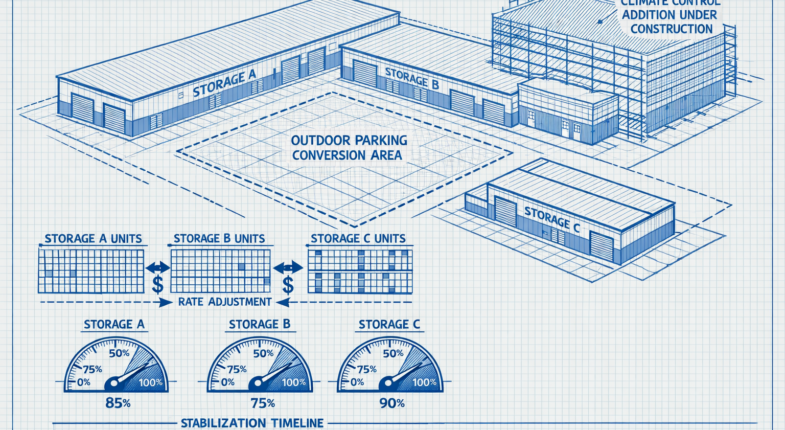
From there, a buyer can look at the physical footprint. Some buildings have outdoor parking areas or underused land that could convert to climate-controlled units. San Diego’s coastal climate makes climate-controlled storage a draw for tenants who want to protect furniture, electronics, and documents. Adding that inventory at a facility that currently has none can change the revenue profile considerably.
Digital access and online rentals are another lever. Facilities that still use in-person leasing lose move-ins from tenants who want to rent at 10pm from their phone. Adding online gate access and an online rental flow can lift occupancy without adding staff hours.
Then there’s the books. Mismanaged buildings sometimes have revenue that looks messy - inconsistent late fees, unreported ancillary income, or delinquent units that haven’t been auctioned. A cleanup surfaces NOI that was always there but wasn’t showing up correctly.
The danger in this is the timeline. A proforma might assume full occupancy and stabilized rates within twelve months. In practice, a rate increase rollout can push some long-term tenants to leave before new ones arrive to replace them. A conversion project can run into permitting delays. Occupancy dips during the transition period are real, and they compress cash flow at the same time a buyer is carrying acquisition debt.
That difference between expected stabilization and actual stabilization is where value-add deals get uncomfortable - it doesn’t make them the wrong call - it just means the underwriting needs to account for the transition period rather than optimistically skipping past it.
The Operators Shaping San Diego’s Self-Storage Landscape
San Diego has a combination of national REITs and independent operators, and that split matters quite a bit for buyers trying to figure out where to play. Public Storage, headquartered in Glendale, and Extra Space Storage have a strong presence across the county. Where they operate, they tend to set the tone for street rates in that submarket.
That’s worth thinking about. REIT-operated buildings use refined revenue management software to adjust rates in near real time. An independent owner nearby is basically competing against a pricing engine. That can be a disadvantage. But it can also work in your favor if you understand what the REIT is doing and why.
In some cases, a nearby REIT facility acts as a pricing anchor instead of a threat. When a known brand runs high occupancy at premium rates, it validates the demand in that area. A smaller independent with lower overhead can undercut slightly and still run a healthy margin. What matters is to know the submarket before drawing any conclusions about proximity to a national brand.
Independent operators still hold actual market share in San Diego. Many of these are family-owned buildings that have been in place for decades and haven’t been pushed to optimize in the way a REIT would; it’s where acquisition opportunities tend to show up. A facility with below-market rates, a paper-based rental process, and no business website is a candidate for improvement without a full redevelopment.
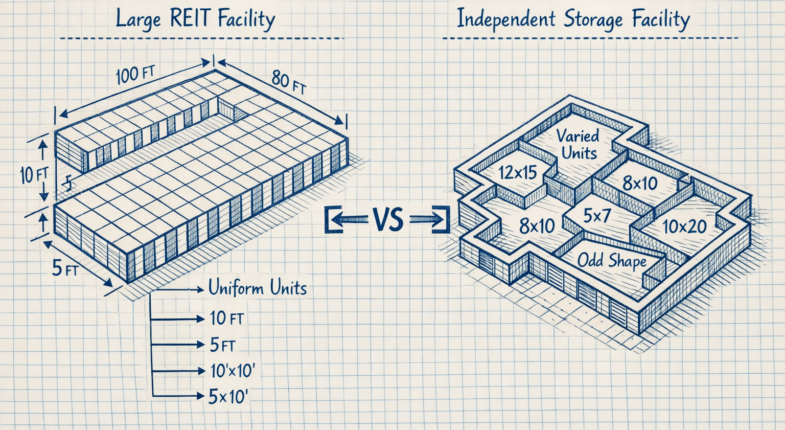
From a buyer’s perspective, the presence of both types of operators in the same market gives you a helpful contrast. REIT buildings set a ceiling for what customers will pay and what occupancy is possible. Independent buildings that haven’t kept pace show you the difference between current performance and what’s achievable. That gap is where the investment case gets built.
It’s also worth mentioning that institutional buyers target bigger, well-located facilities, which leaves a window for smaller investors to acquire independent properties in the 300 to 600 unit range. San Diego isn’t a market where the big players have locked everything up. There’s still room to find a facility with a motivated seller and a path to better performance - and working with a knowledgeable commercial real estate agent can make a real difference in finding those deals.
What Smart Buyers Do Before They Make an Offer on a San Diego Storage Deal
Anyone looking to buy self storage facility California assets - especially in a supply-constrained, high-barrier market like San Diego - should treat operational diligence as inseparable from financial diligence. The cap rate is a conclusion - not a starting point. What drives it is the quality of the rent roll, the trajectory of street rates, the unit combination relative to what the surrounding submarket actually absorbs, and if the management layer can add friction or efficiency. Those variables are knowable before an LOI goes out. Most buyers basically don’t ask for them early enough.
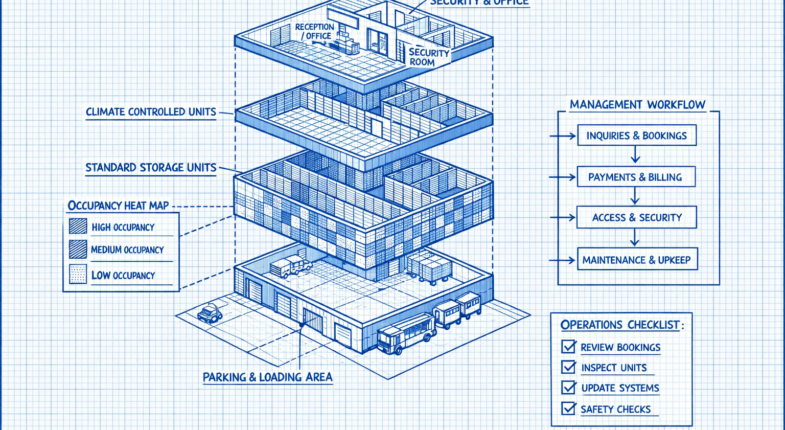
Before submitting an offer on any San Diego self-storage asset, be able to answer the following with specificity:
- What is the economic occupancy trend over the past 24 months, and does it diverge from physical occupancy - if so, why?
- Who is managing the facility, what rental software are they running, and how are rates being set - static schedule or dynamic pricing?
- What does the unit mix look like relative to demonstrated local demand, and are the highest-demand unit sizes at or near full occupancy while others sit vacant?
- What is the average length of tenancy, and what does tenant turnover reveal about pricing pressure or service quality?
- Are there deferred maintenance items or permitting gaps that would affect operations, financing, or exit? A solid commercial real estate due diligence checklist can help you catch these before you close.
If those questions have clean answers, the deal is worth pursuing with conviction. If they don’t, that absence of clarity is itself the data point - and it should inform the price, the financing structure you choose, or the choice to walk.
FAQs
What drives self-storage demand in San Diego?
San Diego's self-storage demand is driven by military relocations, dense apartment living with limited storage space, and seasonal university population turnover. These are structural demand drivers, not cyclical ones, meaning they remain stable regardless of broader economic conditions.
How do San Diego cap rates compare to national averages?
San Diego self-storage cap rates run 50-150 basis points below national averages, meaning buyers pay more per dollar of income than in most other markets. This makes accurate NOI calculation especially critical, as even small errors cause significant valuation swings.
What is economic occupancy and why does it matter?
Economic occupancy reflects actual rent collected, accounting for concessions and delinquencies, unlike physical occupancy which only counts occupied units. A facility can show 92% physical occupancy while collecting significantly less revenue, making economic occupancy the more reliable underwriting metric.
What value-add opportunities exist in San Diego self-storage?
Key value-add opportunities include implementing revenue management software to reach market-rate pricing, converting underused space to climate-controlled units, and enabling online rentals. Buyers should underwrite realistic stabilization timelines, as transitions can temporarily compress cash flow.
How do REIT operators affect independent self-storage facilities?
REIT operators like Public Storage set submarket pricing benchmarks using advanced revenue management software. However, nearby independent facilities with lower overhead can strategically undercut REIT pricing while maintaining healthy margins, turning REIT presence into a demand validator rather than a pure threat.